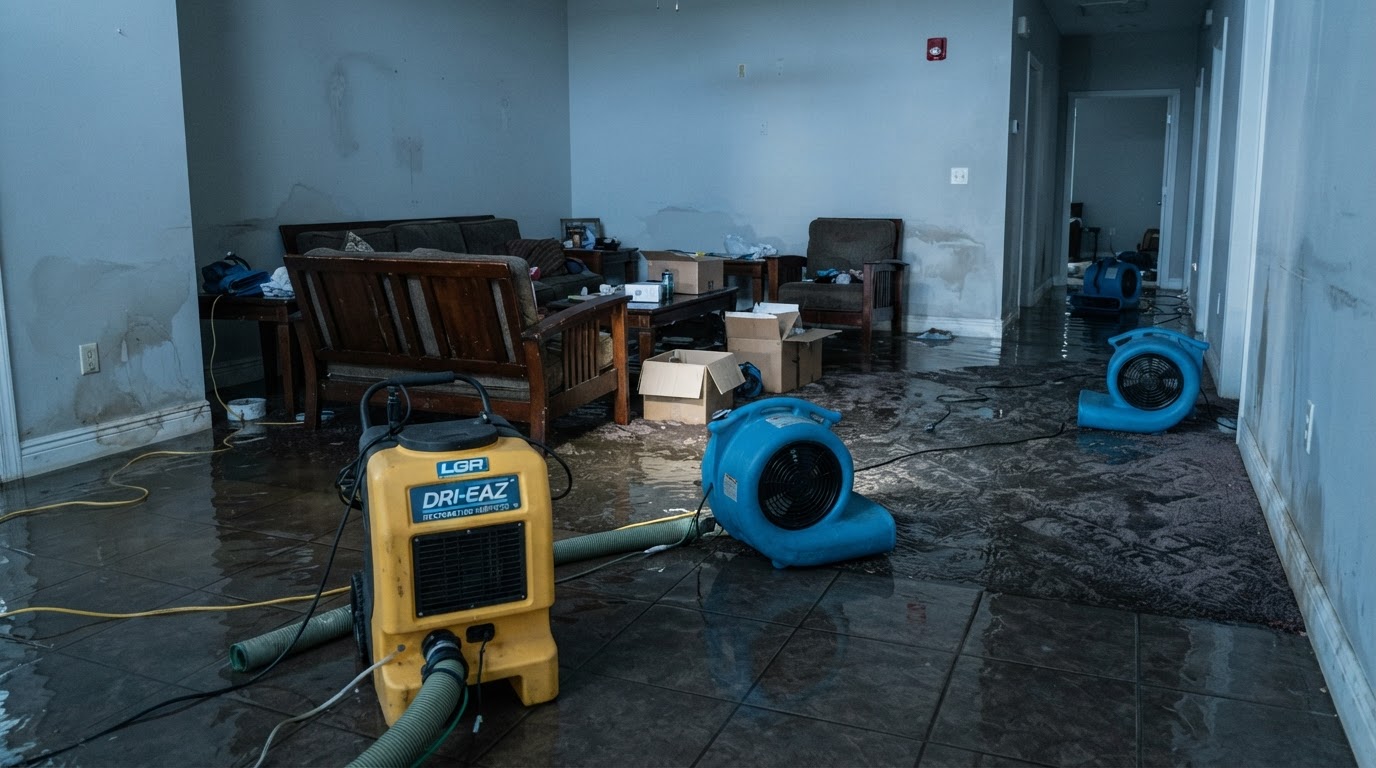
Indoor Flood Water Removal, Cleanup & Structural Drying
Flood Damage Cleanup Daytona Beach
When flooding affects your Daytona Beach property, removing standing water quickly and addressing moisture in all affected materials is critical. We handle storm flooding, plumbing failures, and major appliance water losses.
Request Water Damage Service
Fill out the form below and our team will get in touch with you immediately.
What Can Cause Indoor Flood Damage?
Indoor flooding in Daytona Beach is not always caused by hurricanes. While tropical storms and heavy rainfall are significant contributors during Florida's storm season, many flood events originate from plumbing failures, appliance malfunctions, and drainage problems. A broken supply line can release hundreds of gallons of water into a home before the source is discovered and stopped.
The source of the water affects cleanup considerations. Water from a clean supply line is handled differently from water that has entered through a roof opening, mixed with ground water, or contacted unsanitary materials. Not all floodwater carries the same contamination risk, and the specific category is determined during the on-site assessment rather than assumed in advance.
Weather-Related Sources
- Heavy rainfall and prolonged downpours
- Storm-related water intrusion through openings
- Roof openings and damaged flashing
- Door and window water entry
- Drainage-related water entry
Plumbing & Appliance Sources
- Broken plumbing and supply lines
- Major appliance failures
- Overflowing fixtures and toilets
- Water heater tank rupture
- Washing machine overflow
Properties with significant indoor flooding may require dedicated flood damage cleanup that goes beyond standard extraction. When flooding is storm-related, our storm and hurricane water damage restoration service addresses the specific challenges of weather-driven water intrusion.
Our Flood Damage Cleanup Process
From safety evaluation through final moisture monitoring, each step addresses both visible water and hidden moisture that remains after extraction.
Evaluate Water Source & Safety Conditions
We identify the source of the flooding, assess whether the area is safe to enter, and determine the category of water to guide the cleanup approach.
Stop Continued Water Intrusion
Where practical, we confirm that the water source has been stopped or isolated. If exterior repairs are needed to stop storm-related intrusion, those should be addressed before or during mitigation.
Remove Standing Water
Professional extraction equipment removes floodwater from flooring, carpet, and surface areas throughout all affected rooms.
Identify Affected Rooms & Materials
We map the full extent of the water loss, including rooms adjacent to the visible flooding where water may have traveled along flooring and behind baseboards.
Address Debris & Damaged Materials
Where materials cannot be salvaged, such as saturated padding or contaminated drywall, affected materials are removed to allow access for drying.
Detect Hidden Moisture
Moisture meters identify water that has migrated into wall cavities, subfloors, and concealed spaces beyond the visibly flooded area.
Dry & Dehumidify Affected Structure
Air movers and dehumidifiers are positioned to promote evaporation and capture moisture released from wet building materials into the indoor air.
Monitor Moisture Conditions
Moisture levels are checked during the drying period to confirm progress and adjust equipment positions as areas reach drying goals.
Plan Remaining Restoration Needs
Once drying is complete, we evaluate any remaining affected materials and discuss appropriate next steps for restoration planning.
Flood Damage Throughout a Property
Larger water losses rarely stay confined to one room. Water travels along flooring transitions, seeps behind baseboards, and migrates into wall cavities and adjacent spaces. In Daytona Beach's coastal climate, the combination of warm temperatures and high humidity means wet materials dry slowly on their own, making professional drying equipment essential.
Residential Flood Damage
In homes and condos, floodwater can affect multiple rooms, flooring, baseboards, drywall, insulation, cabinets, and wall cavities. Beachside condos may experience water migrating between units, requiring containment to protect neighboring properties. Vacation properties that are unoccupied for periods may have water losses that go undetected for extended time.
Daytona Beach's heavy summer rainfall and tropical weather patterns contribute to residential flooding through roof intrusion, window entry, and drainage backup.
Commercial Flood Damage
Commercial properties face larger-scale flooding challenges. Retail stores, restaurants, hotels, and office buildings have expansive floor plans where water can travel significant distances. Commercial interiors often involve multiple material types, from carpet and tile to commercial finishes and mechanical rooms.
Our commercial water damage restoration service addresses the specific needs of business properties throughout Daytona Beach.
Materials Affected by Flooding
Flood Cleanup Considerations
The source of water, length of exposure, materials affected, and amount of standing water all influence the cleanup approach. These factors are evaluated during the on-site assessment.
If it is safe to do so, turn off electrical power to the affected area and stop the water source if it is a plumbing issue. Avoid walking through standing water if you suspect contamination or if water is near electrical outlets. Contact Daytona Beach Water Damage Restoration at 386-401-5178 so extraction can begin before water migrates further into building materials.
No. The contamination level depends on the source. Water from a clean supply line break is different from water that has entered through an exterior opening, mixed with ground water, or contacted unsanitary materials. When contamination is suspected, additional cleaning and material removal precautions are taken. The specific category is determined during the on-site assessment.
Drywall can sometimes be dried in place depending on the amount of water, how long it has been wet, and the category of water. Clean water losses caught early may allow drying, while contaminated water or prolonged saturation may require removal of affected drywall sections. Moisture meters help determine whether the material can be saved or should be removed.
Yes. Moisture meters can detect water that has traveled beneath tile, hardwood, laminate, and vinyl flooring into the subfloor. Even when the floor surface appears dry, water often remains trapped between the flooring material and the subfloor. Detection tools map these hidden areas so drying equipment addresses the full extent of the loss.
After standing water is removed, the focus shifts to structural drying and dehumidification. Air movers promote evaporation from wet materials, and dehumidifiers capture moisture released into the indoor air. This phase addresses water that has absorbed into drywall, subfloors, insulation, and wall cavities that extraction alone cannot reach.
Storm flooding typically involves water entering from exterior openings through roof damage, window intrusion, or doorways, and may carry contamination from outside. A plumbing leak usually involves clean water from a supply line or fixture. The source affects the cleanup approach, the category of water, and which materials can be salvaged. Our storm and hurricane water damage restoration service addresses storm-specific intrusion.
Yes. We handle flood damage cleanup for Daytona Beach businesses including offices, retail stores, restaurants, hotels, and multi-unit properties. Commercial flood losses often cover larger areas and involve multiple material types, requiring careful equipment placement and monitoring to address all affected zones.
Need Flood Damage Cleanup in Daytona Beach?
Floodwater continues migrating into building materials until it is removed and the structure is dried. The faster extraction begins, the less moisture absorbs into drywall, subfloors, and wall cavities.
386-401-5178Daytona Beach, FL 32114 | daytonawaterdamagerestoration@gmail.com
Related Water Damage Services
Emergency Water Removal
Rapid standing water removal using professional extraction equipment to stop water migration into subfloors and drywall.
Learn MoreStorm & Hurricane Water Damage Restoration
Water extraction and structural drying after tropical storms, wind-driven rain, and hurricane-related water intrusion.
Learn MoreStructural Drying & Dehumidification
Professional drying of wet walls, floors, ceilings, and building materials after floodwater removal.
Learn MoreSewage Backup & Black Water Cleanup
Safe cleanup for contaminated floodwater involving sewage backups and black water events.
Learn MoreWater Damage Restoration
Complete water damage mitigation including extraction, moisture detection, and structural drying.
Learn More