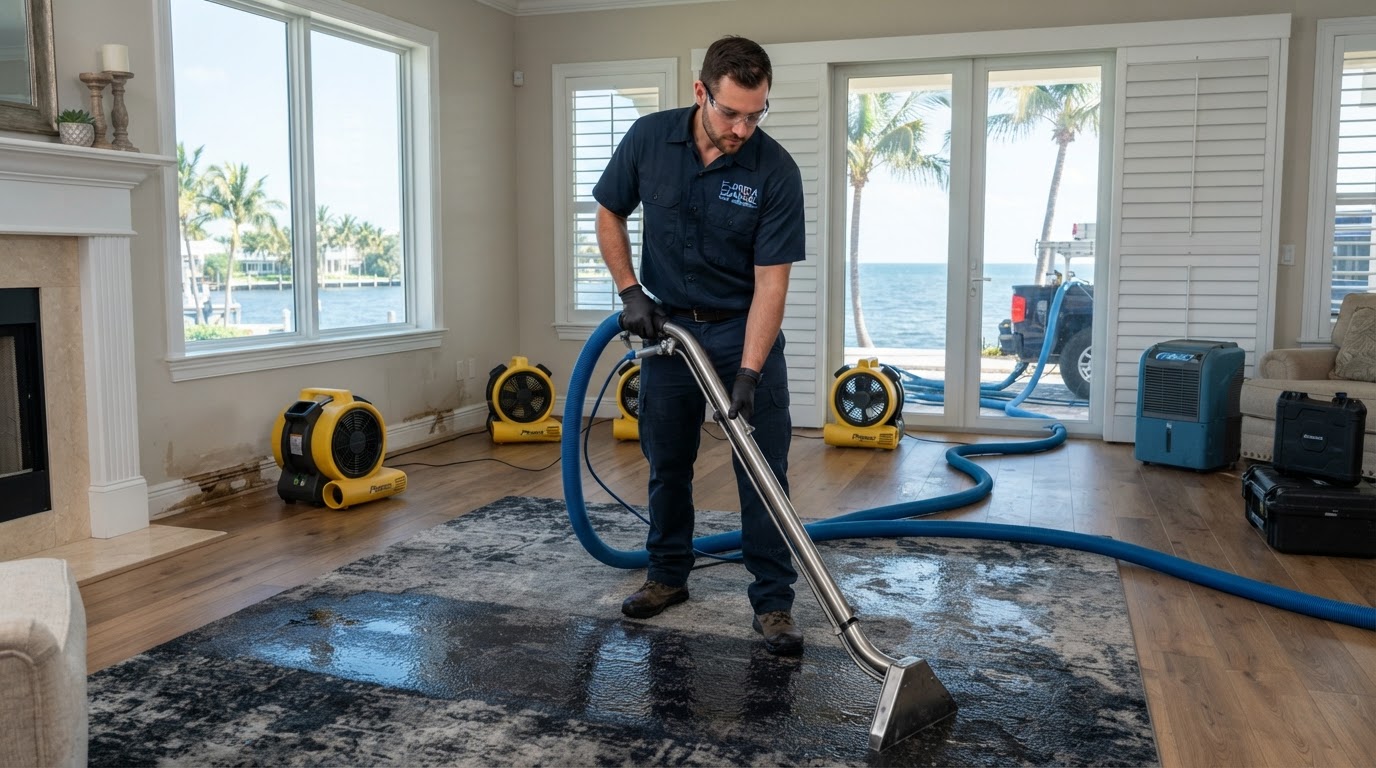
Water Extraction, Moisture Detection & Structural Drying
Water Damage Restoration Daytona Beach
Complete water damage mitigation for Daytona Beach homes, condos, and commercial properties. From standing water removal to structural drying, we address leaks, flooding, and hidden moisture throughout Volusia County.
Request Water Damage Service
Fill out the form below and our team will get in touch with you immediately.
Common Types of Water Damage in Daytona Beach
Water damage in Daytona Beach properties comes from a wide range of sources. A broken supply line under a kitchen sink can release dozens of gallons into cabinetry and subflooring before the leak is even noticed. A failed water heater tank can flood a garage or interior room within minutes. During Florida's storm season, wind-driven rain can push water through roof penetrations and window openings, saturating drywall and insulation above and inside wall cavities.
Coastal humidity compounds every one of these scenarios. When moisture enters a building material, it does not simply stay where it lands. Water migrates along paths of least resistance, moving beneath flooring, behind baseboards, into drywall seams, and through wall cavities. A small visible water stain may represent a much larger area of hidden saturation behind the surface.
Common Sources We Address
- Plumbing leaks and burst pipes
- Water heater tank failures
- Appliance overflows and supply line breaks
- AC condensate drain line backups
- Toilet and bathroom overflows
- Roof leaks and storm water intrusion
- Hidden moisture behind walls and ceilings
Materials That Absorb Water
- Drywall and baseboards
- Flooring and subfloors
- Cabinets and vanities
- Wall cavity insulation
- Ceiling materials
- Carpet and padding
Because water moves beyond the visibly wet area, drying the surface alone does not address moisture that has already migrated into structural materials. A thorough assessment with moisture detection tools is necessary to identify the full extent of the water loss before drying equipment is positioned.
Our Water Damage Restoration Process
A systematic approach to water removal, moisture detection, and structural drying designed to address both visible water and hidden moisture.
Initial Water Damage Assessment
We evaluate the visible water source, identify affected rooms and materials, and document the scope of the water loss before any equipment is positioned.
Identify & Control Ongoing Water Source
Where practical, we confirm that the water source has been stopped or isolated. If a plumbing repair is needed, the appropriate professional should address the source before or during mitigation.
Remove Standing Water
Standing water is extracted using professional extraction equipment to remove bulk water from flooring, carpet, and surface areas before it can migrate further into the structure.
Inspect Affected Materials
We inspect drywall, baseboards, flooring, cabinets, and ceilings for saturation, identifying materials that may need attention based on the category and extent of the water loss.
Detect Moisture Migration
Moisture meters and detection tools are used to evaluate water that has moved beyond the visibly wet area into wall cavities, subfloors, and concealed spaces.
Set Drying & Dehumidification Equipment
Air movers and dehumidifiers are positioned to promote evaporation and capture moisture released from wet building materials into the indoor air.
Monitor Drying Conditions
Moisture levels are checked during the drying period and equipment positions are adjusted as areas reach appropriate drying goals.
Evaluate Remaining Damage & Next Steps
Once drying targets are reached, we evaluate any remaining affected materials and discuss appropriate next steps for restoration planning.
Residential & Commercial Water Damage
The amount and location of water, the types of materials affected, and the property layout all influence the mitigation strategy.
Residential Properties
Daytona Beach residential properties include single-family homes, beachside condos, apartments, and vacation rental properties. Each presents unique drying considerations. Multi-unit buildings require attention to water migration between floors, while condos may need containment to protect neighboring units below.
Common residential water loss sources include appliance failures, plumbing leaks, AC condensate backups, and roof intrusion during storms.
Commercial Properties
Commercial water damage affects offices, retail stores, restaurants, hotels, hospitality properties, and multi-unit buildings. Larger floor plans and multiple material types require careful equipment placement and monitoring to address all affected areas.
Our commercial water damage restoration service addresses the specific needs of business properties throughout Daytona Beach.
Why Timely Water Damage Mitigation Matters
Water continues migrating into building materials until it is removed and the structure is dried. Understanding what happens after a water loss helps property owners make informed decisions.
If it is safe to do so, turn off the water supply to stop ongoing water flow and switch off electrical power to affected rooms if water is near outlets or appliances. Avoid walking through standing water if you suspect contamination or electrical hazards. Contact Daytona Beach Water Damage Restoration at 386-401-5178 so extraction and mitigation can begin before water migrates further into building materials.
Standing water should be extracted as quickly as possible. Drywall, baseboards, and flooring absorb moisture rapidly, and in coastal Florida's humid environment, wet materials can begin to deteriorate within the first 24 to 48 hours. Removing bulk water early reduces the amount of moisture that structural drying equipment must address afterward.
Yes. Water frequently travels along subfloors, behind baseboards, and up into wall cavities through capillary action. The surface of a wall may feel dry to the touch while the studs, insulation, and drywall interior remain saturated. Moisture meters and detection tools are used to locate hidden moisture that would not be visible during a surface inspection.
Air movers are positioned to create airflow across wet surfaces, promoting evaporation of moisture out of materials. Dehumidifiers capture the moisture released into the indoor air, lowering humidity and allowing the drying process to continue. Moisture meters are used to monitor progress and confirm when materials have reached appropriate drying goals.
Hardwood flooring can sometimes be dried in place depending on the amount of water, how long it has been wet, and the type of finish. Moisture meters help determine whether water has penetrated the wood and subfloor. In some cases, cupping or warping may indicate that replacement is necessary. Each situation is evaluated individually rather than assuming all materials can be saved.
Yes. We provide water damage restoration for single-family homes, condos, apartments, vacation properties, offices, retail stores, restaurants, hotels, and other commercial structures throughout Daytona Beach and surrounding Volusia County communities. The mitigation approach is tailored to the property type and the extent of the water loss.
We serve Daytona Beach (ZIP 32114 and surrounding areas) and nearby communities including Daytona Beach Shores, South Daytona, Holly Hill, Ormond Beach, Port Orange, Ponce Inlet, New Smyrna Beach, Edgewater, DeLand, Deltona, Orange City, DeBary, Flagler Beach, and Palm Coast.
Need Water Damage Restoration in Daytona Beach?
Water migration does not pause. Every hour standing water remains in your drywall, subfloors, and ceiling cavities, the risk of permanent structural damage increases. Contact us now to begin extraction and drying.
386-401-5178Daytona Beach, FL 32114 | daytonawaterdamagerestoration@gmail.com
Related Water Damage Services
Emergency Water Removal & Extraction
Rapid standing water removal using professional extraction equipment to stop water migration into subfloors and drywall.
Learn MoreFlood Damage Cleanup
Indoor flood water removal, cleanup, and structural drying for storm and plumbing-related flooding events.
Learn MoreBurst Pipe & Plumbing Leak Cleanup
Water removal and drying after broken supply lines, burst pipes, and concealed plumbing failures.
Learn MoreStructural Drying & Dehumidification
Professional drying of wet walls, floors, ceilings, and building materials using air movers and dehumidifiers.
Learn MoreRoof Leak & Hidden Water Damage Cleanup
Detection and drying for ceiling water stains, roof leak intrusion, and hidden moisture migration.
Learn More