Professional Drying for Wet Walls, Floors, Ceilings & Building Materials
Structural Drying & Dehumidification Daytona Beach
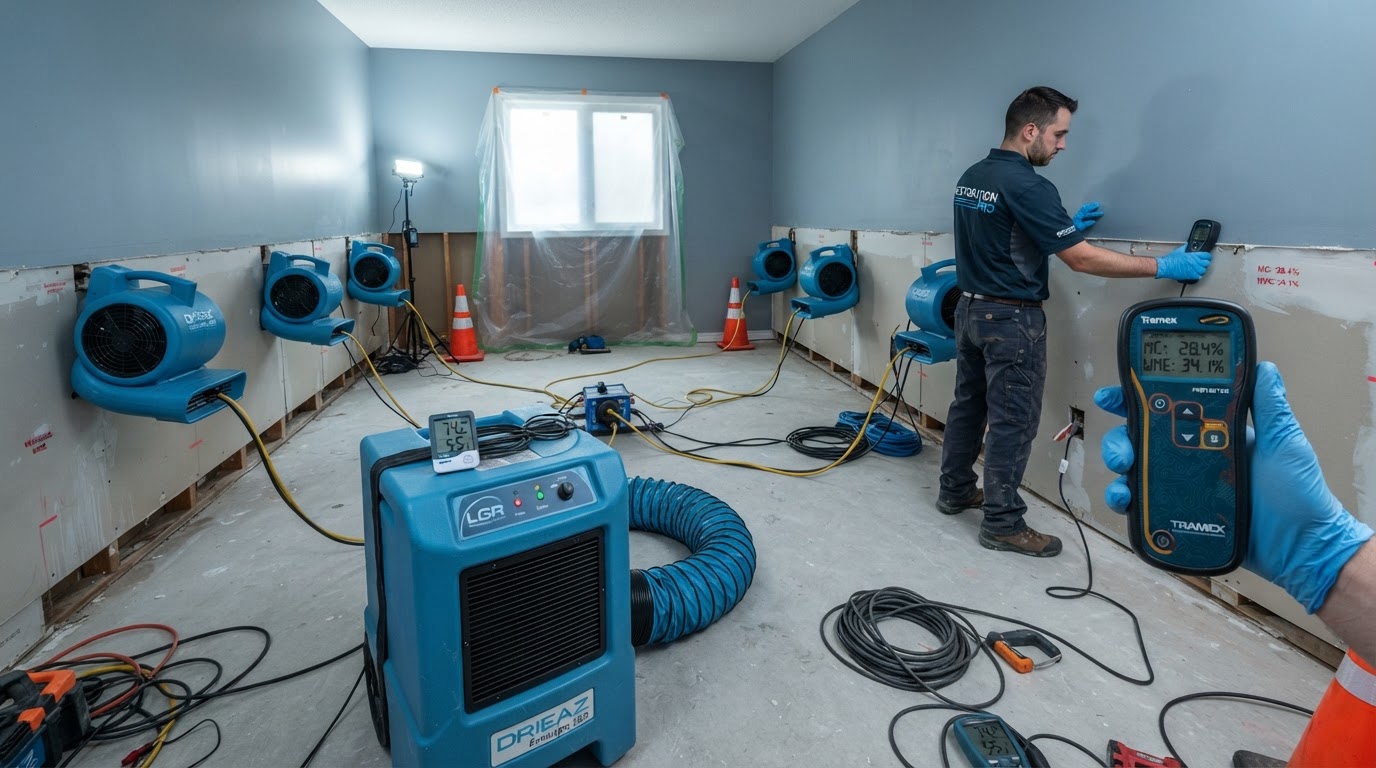
After standing water is removed, moisture remains inside building materials. Structural drying uses air movers and dehumidifiers to address this trapped moisture, promoting controlled evaporation until materials reach appropriate drying goals.
Request Water Damage Service
Fill out the form below and our team will get in touch with you immediately.
Why Water Extraction Alone Is Not Always Enough
Water extraction is the critical first step that removes visible standing water from a property. But extraction primarily addresses water on surfaces and in carpet. Moisture that has absorbed into building materials remains after the visible water is gone, and this trapped moisture requires a different approach to remove.
Drywall, wood framing, subfloors, insulation, cabinets, and wall cavities all absorb water. Even after extraction, these materials hold moisture that cannot be removed by suction alone. Structural drying uses airflow to promote evaporation from these materials, and dehumidification captures the moisture released into the air so the drying process can continue.
Where Residual Moisture Hides
Drywall
Absorbs water like a sponge, wicking moisture upward into wall cavities.
Wood & Framing
Wall studs, joists, and trim absorb water and release it slowly.
Subfloor
Plywood and OSB subflooring holds water beneath flooring materials.
Insulation
Wall and ceiling insulation absorbs water and retains it against materials.
Cabinets
Cabinet bases and toe kicks trap moisture against flooring and walls.
Wall Cavities
Concealed spaces behind drywall hold moisture invisible from outside.
Flooring Assemblies
Water settles between flooring and subfloor, hidden from view.
Indoor Air
Evaporated moisture raises indoor humidity, slowing natural drying.
How Evaporation & Dehumidification Work Together
Air movers create continuous airflow across wet surfaces, which promotes evaporation. As moisture leaves the materials and enters the air, indoor humidity rises. Dehumidifiers capture this airborne moisture, lowering the humidity and allowing the air to absorb more moisture from the materials. This cycle continues until moisture levels in the materials return to appropriate drying goals. In coastal Florida's naturally humid environment, dehumidification is especially important because the outdoor air already carries significant moisture.
Our Structural Drying Process
From initial moisture assessment through final evaluation, each step is designed to measure, monitor, and verify that building materials reach appropriate drying goals.
Initial Moisture Assessment
We measure moisture levels in all potentially affected materials, establishing a baseline that guides the drying plan and helps confirm when drying is complete.
Identify Affected Materials
We map which materials are wet, including drywall, flooring, subfloors, ceilings, cabinets, and wall cavities, using moisture meters to find moisture beyond the visible area.
Remove Standing Water Where Necessary
If standing water remains, extraction is performed first. Bulk water removal must happen before drying equipment can effectively address moisture inside materials.
Establish Airflow
Air movers are positioned to create continuous airflow across wet surfaces. This airflow promotes evaporation, drawing moisture out of materials and into the indoor air.
Install Dehumidification Equipment
Dehumidifiers capture the moisture released into the air by the air movers, lowering indoor humidity and allowing the evaporation process to continue drawing moisture from materials.
Monitor Moisture Levels
Moisture readings are taken during the drying period to track progress. Daily monitoring confirms that materials are moving toward appropriate drying goals.
Adjust Drying Setup as Needed
As some areas dry faster than others, equipment positions are adjusted to focus airflow and dehumidification on materials that still need drying.
Continue Until Drying Goals Are Reached
Drying continues until moisture readings in affected materials return to appropriate levels. This may require several days depending on the extent of saturation and material types.
Evaluate Remaining Affected Materials
Once drying targets are met, we evaluate whether any materials require further attention or whether the drying phase is complete.
Materials That May Require Drying
Different materials absorb and release moisture at different rates. The drying approach is tailored to the specific materials affected in each property.
Drywall & Walls
Drywall absorbs water rapidly and can wick moisture upward into wall cavities through capillary action. Moisture meters detect water behind the surface, and in some cases, small weep holes are created in baseboard areas to allow airflow into wall cavities. Whether drywall can be dried in place depends on the water category, duration of exposure, and structural condition.
Flooring & Subfloor
Carpet, hardwood, laminate, tile, and vinyl flooring each interact with water differently. Carpet padding may need removal while the carpet is dried and reinstalled. Hardwood may cup or warp depending on moisture exposure. Moisture meters detect water that has traveled beneath flooring into the subfloor, which may require access through the flooring or from below.
Ceilings
Ceiling water damage can result from plumbing leaks above, HVAC issues, roof intrusion, or water from upper units in multi-story buildings. Wet ceiling drywall may sag or require removal depending on the weight of trapped water. Drying addresses moisture in ceiling assemblies and the spaces above, where insulation and framing may also be wet.
Cabinets & Wood Materials
Wood cabinetry, vanities, and trim absorb water through exposed surfaces and joints. Pressed wood and particle board components may swell and require replacement, while solid wood may sometimes be dried. Toe kick areas at the base of cabinets are inspected for trapped moisture, and airflow may be directed into cabinet interiors during drying.
Commercial Interiors
Commercial properties often involve larger floor areas and multiple material types, from carpet and tile to commercial finishes and wall systems. Drying equipment is positioned to address the full scope of affected materials, with monitoring to ensure all areas reach appropriate drying goals. Our commercial water damage restoration service covers larger-scale drying operations.
Dehumidification & Moisture Monitoring FAQ
Answers to common questions about structural drying, dehumidification, moisture detection, and how the drying process is monitored.
Structural drying is the process of removing moisture that has absorbed into building materials after a water loss. While water extraction removes visible standing water, structural drying addresses water that has penetrated into drywall, wood, subfloors, insulation, and other materials. Air movers promote evaporation from wet surfaces, and dehumidifiers capture the moisture released into the indoor air.
A dehumidifier removes moisture from the indoor air. As air movers promote evaporation from wet materials, the moisture released enters the air. Without dehumidification, this moisture would reabsorb into materials or remain trapped in the indoor environment. Dehumidifiers capture this airborne moisture, lowering humidity and allowing the drying process to continue pulling moisture from wet materials.
Air movers create high-velocity airflow across wet surfaces, which promotes evaporation. The continuous movement of air draws moisture out of wet materials and into the indoor air, where dehumidifiers capture it. Without airflow, evaporation occurs slowly and moisture remains trapped in materials. Air movers are positioned strategically to target the wettest areas and create optimal drying conditions.
Moisture meters are used to measure the moisture content in wall materials. Readings are compared to a dry baseline established for the property, and drying continues until moisture levels in affected materials return to appropriate targets. The drying is not considered complete until measurements confirm that moisture has been reduced to acceptable levels throughout all previously wet areas.
Yes. Water frequently travels beneath flooring materials into the subfloor, where it is not visible from above. Moisture meters can detect trapped moisture under tile, hardwood, laminate, and vinyl. In some cases, flooring may need to be lifted or access holes created to allow airflow to reach the subfloor during drying.
Not always. Whether drywall can be dried in place depends on the amount of water, how long it has been wet, the category of water, and whether the structural integrity has been compromised. Clean water losses caught early may allow drying, while prolonged saturation or contamination may require removal. Moisture meters help determine whether drying is appropriate or replacement is necessary.
In most cases, yes. Water extraction removes standing water from surfaces, but moisture that has absorbed into drywall, subfloors, insulation, and wall cavities cannot be removed by extraction alone. Without structural drying, this trapped moisture remains in materials, potentially causing ongoing deterioration. Drying equipment addresses the moisture that extraction cannot reach.
Need Structural Drying in Daytona Beach?
Moisture trapped inside building materials does not dry on its own in coastal Florida's humid climate. Professional drying equipment and monitoring are needed to bring materials back to appropriate moisture levels.
386-401-5178Daytona Beach, FL 32114 | daytonawaterdamagerestoration@gmail.com
Related Water Damage Services
Water Damage Restoration
Complete water damage mitigation including extraction, moisture detection, and structural drying.
Learn MoreEmergency Water Removal
Standing water removal that precedes structural drying in the mitigation process.
Learn MoreFlood Damage Cleanup
Indoor flood water removal and drying after storm and plumbing-related flooding.
Learn MoreBurst Pipe & Plumbing Leak Cleanup
Water removal and drying after plumbing failures that often require structural drying.
Learn MoreRoof Leak & Hidden Water Damage Cleanup
Detection and drying for hidden moisture in ceilings, walls, and concealed spaces.
Learn More