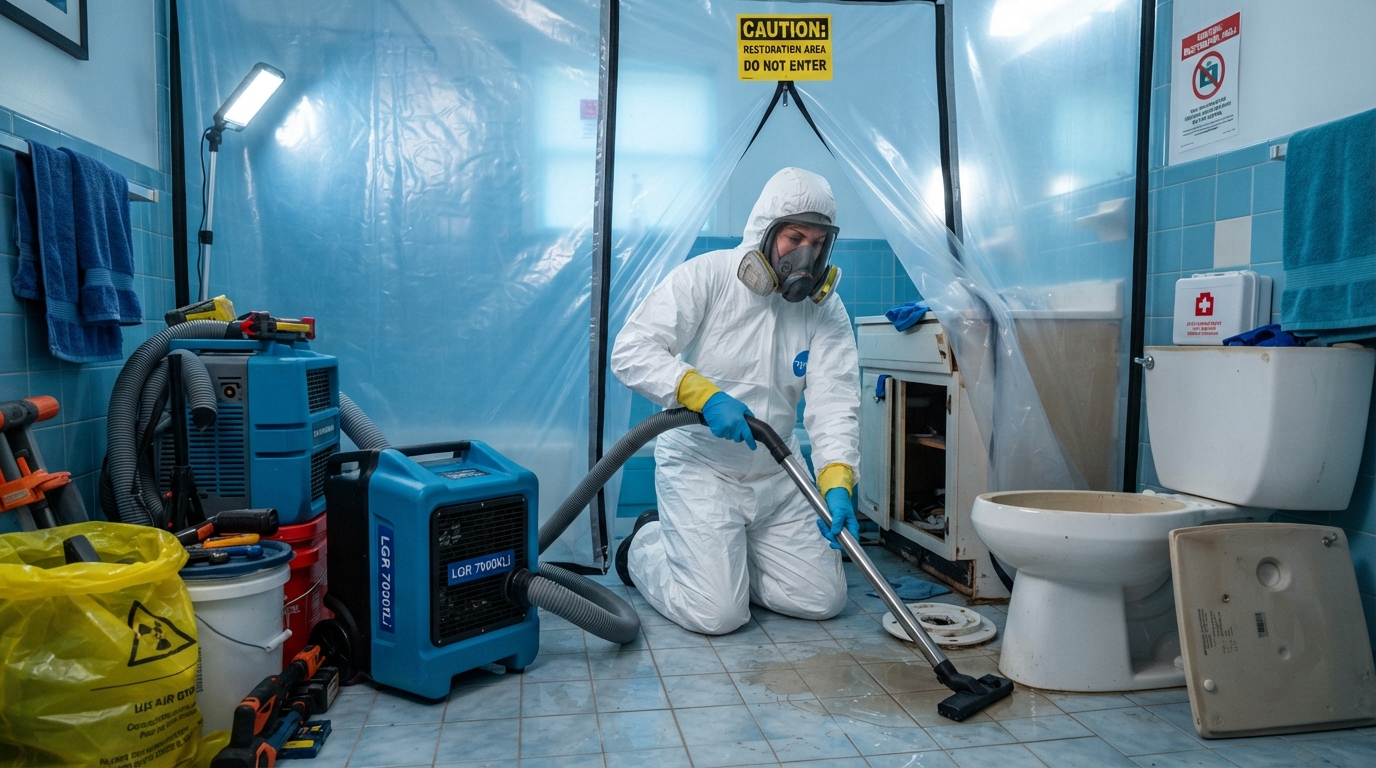
Professional Cleanup for Contaminated Water
Sewage Backup & Black Water Cleanup Daytona Beach
Sewage backups and black water events require specialized handling. Contaminated water affects porous materials differently from clean water losses, and the cleanup process involves additional precautions throughout.
Request Water Damage Service
Fill out the form below and our team will get in touch with you immediately.
Why Sewage Water Requires Different Handling
Sewage and wastewater may contain contaminants that require additional precautions during cleanup. Unlike a clean supply line break where the primary focus is water removal and drying, a sewage backup involves evaluating which materials can be cleaned and which must be removed based on their porosity and the extent of contamination exposure.
Contaminated water affects porous materials differently. Carpet, padding, drywall, and insulation that have contacted sewage may require removal, while nonporous surfaces like tile and metal can often be cleaned with appropriate approaches. The goal is to address affected materials according to the type and category of water loss encountered.
Common Sewage Backup Scenarios
- Backed-up toilets involving waste
- Sewer and drain line backups
- Wastewater discharge
- Contaminated overflow from fixtures
- Water that has contacted unsanitary materials
- Black water events from exterior flooding
Important: If standing water is near electrical equipment or the area appears unsafe, avoid entering until the appropriate professional has evaluated the situation. Do not attempt to clean contaminated water without appropriate protective equipment.
Our Sewage Backup Cleanup Process
Contaminated water cleanup follows a careful sequence from evaluation through drying, with additional handling considerations at each stage.
Evaluate Affected Areas
We assess the extent of the sewage backup, identify which rooms and materials are affected, and determine the contamination level to guide the cleanup approach.
Identify Ongoing Source
Where possible, we identify whether the backup is ongoing. The source of the sewage backup may need to be addressed by the appropriate plumbing professional before mitigation can be fully completed.
Limit Access to Contaminated Areas
Access to affected areas is restricted to reduce exposure. If standing water is near electrical equipment or the area appears unsafe, the area should not be entered until the appropriate professional has evaluated the situation.
Remove Contaminated Standing Water
Contaminated water is extracted using professional equipment designed for this type of water loss, with appropriate handling considerations throughout the process.
Evaluate Porous & Nonporous Materials
Porous materials that have contacted contaminated water may require removal, while nonporous surfaces may be addressed with appropriate cleaning. Each material is evaluated individually.
Remove Materials When Appropriate
Saturated carpet padding, affected drywall, insulation, and other porous materials that cannot be appropriately cleaned may be removed to allow access for drying and to address contamination concerns.
Clean Affected Surfaces
Remaining nonporous and semi-porous surfaces are cleaned using appropriate cleaning approaches for the type of water loss encountered.
Dry & Dehumidify Remaining Materials
After contaminated materials are addressed, structural drying and dehumidification equipment is positioned to dry remaining building materials. Our <Link to="/structural-drying-daytona-beach/" className="text-[#0287D0] font-semibold underline hover:text-[#074482]">structural drying service</Link> covers this phase.
Reevaluate Affected Areas
Once cleaning and drying are underway, affected areas are reevaluated to confirm that moisture levels are reaching appropriate goals and that remaining materials are being addressed properly.
Areas Commonly Affected by Sewage Backups
Sewage backups most frequently affect areas near plumbing fixtures and drain lines. Bathrooms are the most common location, but backups can affect laundry areas, commercial restrooms, and hallways connected to affected plumbing. The proximity to the backup source and the porosity of materials in each area determine the cleanup approach.
Bathrooms
Toilet backups, shower drains, and bathroom plumbing fixtures.
Laundry Areas
Drain line backups near washing machines and utility sinks.
Commercial Restrooms
Multi-stall restrooms in offices, restaurants, and retail.
Kitchens
Sink drain backups and plumbing near affected lines.
Hallways
Water migration from backup source into adjacent spaces.
Flooring
Carpet, tile, and subfloor materials exposed to contaminated water.
Drywall
Lower wall sections and baseboards absorbing contaminated water.
Cabinets
Vanity and cabinet bases in contact with contaminated water.
Lower Levels
Basement or lower-level areas where backups can pool.
Porous vs. Nonporous Materials
Porous materials such as carpet, padding, drywall, and insulation absorb contaminated water in ways that are difficult to fully address through surface cleaning. These materials often require removal. Nonporous materials like tile, metal, and sealed surfaces can typically be cleaned with appropriate approaches. Semi-porous materials such as wood cabinetry are evaluated individually based on the extent of exposure and whether contamination can be appropriately addressed.
Contaminated Water Cleanup Considerations
Sewage backups involve additional handling considerations. These answers address common questions about safety, material removal, and the cleanup process.
Avoid entering the affected area if possible, especially if standing water is near electrical equipment or the area appears unsafe. Do not attempt to clean contaminated water without appropriate protective equipment. Contact Daytona Beach Water Damage Restoration at 386-401-5178 so the affected area can be evaluated and proper cleanup can begin with appropriate handling considerations.
No. Avoid walking through sewage-contaminated water. If the area must be accessed, appropriate protective equipment should be worn. If standing water is near electrical equipment or the area appears unsafe, avoid entering until the appropriate professional has evaluated the situation. Direct contact with contaminated water should be minimized.
In most cases, carpet and padding that have been directly exposed to sewage or contaminated water require removal. Porous materials absorb contaminants in ways that are difficult to fully address through cleaning. The specific determination is made during the on-site assessment based on the extent of exposure and the category of water involved.
Not always. A toilet overflow that involves only clean water from the bowl may be handled differently from one that involves waste material or sewage backup. The category of water depends on the source and what the water has contacted. During the assessment, the specific situation is evaluated to determine the appropriate handling approach.
Porous materials such as carpet, padding, drywall, insulation, and pressed wood products may require removal after contamination exposure. Nonporous materials like tile, metal, and some plastics can often be cleaned. The specific materials affected and their condition are evaluated during the on-site assessment to determine what can be cleaned and what should be removed.
Yes. After contaminated materials are removed and affected surfaces are cleaned, remaining structural materials still need to be dried. Air movers and dehumidifiers are positioned to address moisture in subfloors, wall cavities, and other building materials that remain after the contaminated water removal phase.
Sewage cleanup involves additional handling considerations due to potential contamination. Porous materials may require removal rather than drying, and affected surfaces require appropriate cleaning. Normal water extraction from a clean supply line break focuses primarily on removing water and drying materials. The category of water determines the approach taken throughout the mitigation process.
Need Sewage Backup Cleanup in Daytona Beach?
Contaminated water requires specialized handling. Avoid entering the affected area and contact us for professional cleanup with appropriate precautions throughout the process.
386-401-5178Daytona Beach, FL 32114 | daytonawaterdamagerestoration@gmail.com
Related Water Damage Services
Water Damage Restoration
Complete water damage mitigation including extraction, moisture detection, and structural drying for homes and businesses.
Learn MoreEmergency Water Removal
Rapid standing water removal using professional extraction equipment for contaminated and clean water losses.
Learn MoreFlood Damage Cleanup
Indoor flood water removal, cleanup, and structural drying for storm and plumbing-related flooding.
Learn MoreBathroom Water Damage Cleanup
Cleanup for toilet overflows, shower leaks, and bathroom plumbing water damage.
Learn MoreStructural Drying & Dehumidification
Professional drying of wet walls, floors, and building materials after contaminated water removal.
Learn More