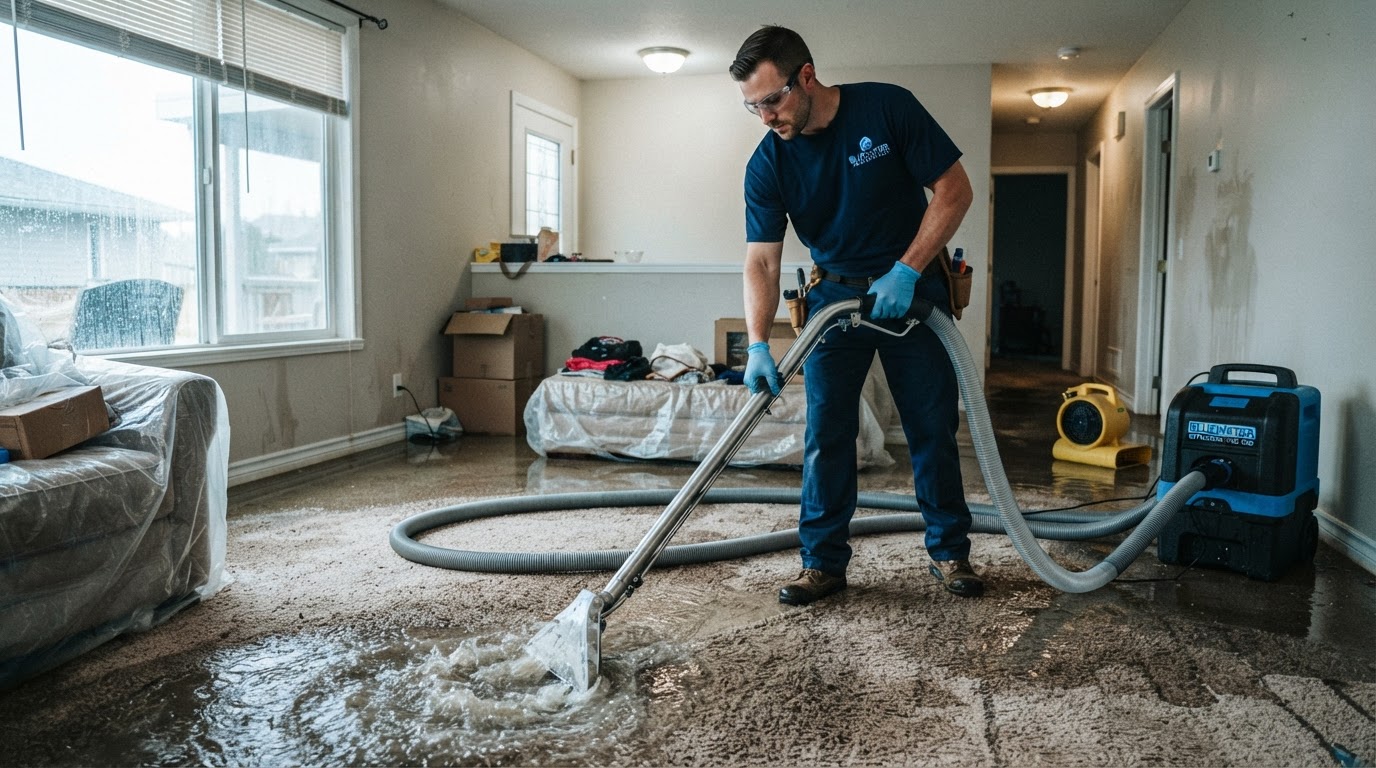
Standing Water Removal & Professional Extraction
Emergency Water Removal & Water Extraction Daytona Beach
When water is standing in your home or business, removing it quickly is the first priority. Professional extraction removes bulk water from carpet, flooring, and surface areas before it migrates deeper into structural materials.
Request Water Damage Service
Fill out the form below and our team will get in touch with you immediately.
When Water Extraction Is Needed
Water extraction is needed any time standing water has accumulated inside a property. In Daytona Beach, the most common scenarios include a burst supply line that floods a room before the water can be shut off, a washing machine overflow that sends water across a laundry room and into adjacent hallways, or a failed water heater that releases its entire tank contents onto the floor.
Storm-related indoor flooding, toilet overflows, and rainwater intrusion through roof or window openings can also create situations where standing water must be extracted before drying can begin. The faster bulk water is removed, the less moisture absorbs into drywall, subfloors, and wall cavities.
Extraction vs. Structural Drying: What's the Difference?
Water Extraction
Removes visible standing water from surfaces, carpet, and flooring using professional extraction equipment. This is the first step that removes the bulk of the water before drying begins.
Structural Drying
Addresses moisture that has absorbed into building materials and the indoor air using air movers and dehumidifiers. If moisture remains inside walls or floors after standing water is removed, our structural drying and dehumidification service addresses the next stage of mitigation.
Common Extraction Scenarios
- Burst supply line flooding
- Washing machine overflow
- Failed water heater discharge
- Toilet overflow
- Rainwater intrusion
- Storm-related indoor flooding
Standing Water? Call Now
Water migrates into subfloors and drywall every minute it remains standing. Extraction is the fastest way to remove bulk water.
386-401-5178Our Water Extraction Process
From assessment through drying transition, each step is designed to remove water efficiently and prepare the structure for thorough drying.
Assess Source & Affected Area
We identify the source of the water loss, evaluate which rooms and materials are affected, and determine the category of water to guide the extraction approach.
Stop Continued Water Flow
Where practical, we confirm that the water source has been stopped or isolated. If a plumbing repair is needed, the source should be addressed before or during mitigation.
Identify Visible Standing Water
We map the extent of visible standing water, including water that has traveled into adjacent rooms, closets, hallways, and lower cabinet areas.
Extract Bulk Water
Professional extraction equipment removes standing water from carpet, hard flooring, and surface areas. This is the most efficient way to remove the majority of water before drying begins.
Inspect Wet Flooring & Surrounding Materials
We inspect carpet padding, subflooring, baseboards, and nearby drywall for saturation that may not be visible from the surface.
Measure Moisture Beyond the Visible Area
Moisture meters are used to detect water that has migrated beneath flooring, behind baseboards, and into wall cavities outside the visibly flooded zone.
Transition to Structural Drying
Once bulk water is removed, air movers and dehumidifiers are positioned to address moisture remaining inside materials and the indoor air. Our structural drying and dehumidification service covers this next stage.
Monitor Affected Areas
Moisture levels are checked during the drying period to confirm that materials are reaching appropriate drying goals and to adjust equipment as needed.
Areas Where Standing Water Can Collect
Water does not stay where it lands. It flows along the lowest paths, pooling in unexpected areas and migrating into adjacent rooms through flooring seams, under doorways, and behind baseboards. Understanding where water collects helps ensure that extraction addresses all affected areas, not just the obvious ones.
Carpeted Rooms
Carpet and padding absorb large volumes of water, often hiding the true extent of saturation beneath the surface.
Tile & Hard Floors
Water travels along grout lines and beneath hard flooring into the subfloor below.
Kitchens & Bathrooms
Cabinets, toe kicks, and vanity bases trap water against drywall and flooring.
Laundry Rooms
Supply hose failures and drain overflows can flood laundry areas and adjacent hallways.
Garages
Water heater failures often discharge into garages where water pools against drywall and concrete.
Commercial Spaces
Larger floor plans allow water to travel significant distances before pooling.
Hallways & Closets
Water follows flooring transitions into hallways and closets adjacent to the source.
Wall Edges
Water migrates behind baseboards and up into wall cavities through capillary action.
Underneath Flooring
Water settles between flooring materials and subfloors, invisible from above.
Wet Carpet & Padding
Carpet and padding are among the most absorbent materials in a property. Extraction pulls water from carpet fibers, but the padding beneath often remains saturated. In many cases, the carpet is lifted, the padding is removed, and the subfloor is dried before new padding and the original carpet are reinstalled. The approach depends on the water category, duration of exposure, and carpet condition. For broader water damage scenarios, our complete water damage restoration service covers the full mitigation process.
Why Extraction Should Come Before Drying
Removing bulk water reduces the load on structural drying equipment. The less standing water remains, the faster and more effective the drying phase becomes.
Professional water extraction is the process of removing standing water from a property using specialized extraction equipment designed to pull water from carpet, hard flooring, and surface areas. This is distinct from simply mopping or using a wet vacuum, as professional extractors remove significantly more water and can access water that has moved into padding and subfloor layers.
Air movers are designed to promote evaporation from wet materials, not to remove standing water. Relying on airflow alone to evaporate a pool of standing water would take far longer and allow more moisture to absorb into surrounding materials. Extraction removes the bulk water first, then air movers address the remaining moisture in materials.
Carpet and padding absorb significant amounts of water. Extraction equipment pulls water from carpet fibers, but padding beneath may remain saturated. In some cases, the carpet can be lifted, the padding removed and replaced, and the carpet dried and reinstalled. The approach depends on the category of water, how long the carpet has been wet, and the type of carpet.
Yes. Water moves along paths of least resistance and can travel beneath tile, hardwood, laminate, and vinyl flooring into the subfloor below. Even when the floor surface appears mostly dry, moisture meters can detect water trapped between the flooring material and the subfloor that would not be visible during a surface inspection.
Moisture meters and detection tools are used to measure moisture content in materials beyond the visible water line. Water frequently migrates into adjacent rooms, behind baseboards, and up into wall cavities through capillary action. These hidden areas are mapped during the assessment so that drying equipment addresses the full extent of the water loss.
After bulk water is removed, the focus shifts to structural drying and dehumidification. Air movers create airflow across wet surfaces to promote evaporation, and dehumidifiers capture the moisture released into the air. This phase addresses water that has absorbed into drywall, subfloors, wall cavities, and other building materials that extraction alone cannot reach.
No. Water extraction is the first step, removing visible standing water from the property. Full water damage restoration includes extraction, moisture detection, structural drying, dehumidification, cleaning of affected materials, and evaluation of remaining damage. Extraction addresses the bulk water, while drying and dehumidification address moisture that has absorbed into structural materials.
Standing Water in Your Daytona Beach Property?
Every minute standing water remains, more moisture absorbs into flooring, drywall, and subfloor materials. Professional extraction is the fastest way to remove bulk water and begin the drying process.
386-401-5178Daytona Beach, FL 32114 | daytonawaterdamagerestoration@gmail.com
Related Water Damage Services
Water Damage Restoration
Complete water damage mitigation including extraction, moisture detection, and structural drying for homes and businesses.
Learn MoreFlood Damage Cleanup
Indoor flood water removal, cleanup, and structural drying after storm or plumbing-related flooding.
Learn MoreBurst Pipe & Plumbing Leak Cleanup
Water removal and drying after broken pipes, supply line failures, and concealed plumbing leaks.
Learn MoreStructural Drying & Dehumidification
Professional drying of wet walls, floors, and building materials using air movers and dehumidifiers.
Learn MoreWashing Machine Overflow Cleanup
Extraction and drying after laundry room hose failures, drain overflows, and appliance water leaks.
Learn More