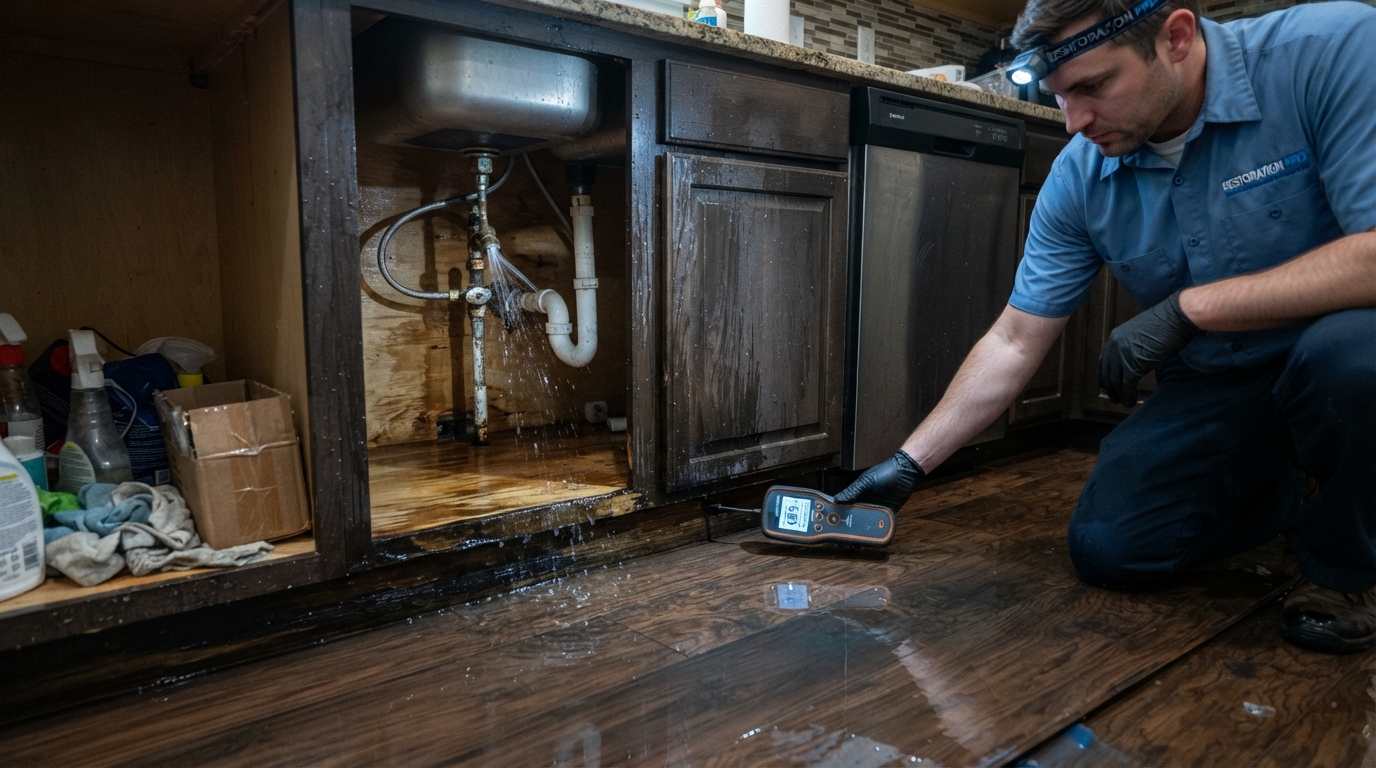
Water Removal & Drying After Broken Pipes and Plumbing Leaks
Burst Pipe & Plumbing Leak Cleanup Daytona Beach
When a pipe bursts or a supply line fails, water can flood a room within minutes. We handle water removal, moisture detection, and structural drying after plumbing failures throughout Daytona Beach.
Request Water Damage Service
Fill out the form below and our team will get in touch with you immediately.
Common Plumbing Water Damage Sources
Plumbing failures are one of the most common causes of water damage in Daytona Beach properties. A sudden burst pipe can release hundreds of gallons of water into a home before the supply is shut off, while a slow leak inside a wall cavity can saturate drywall and insulation over weeks or months without being noticed.
Small leaks create concealed moisture that may not be visible until staining, warping, or odor appears. Sudden failures release larger amounts of water that pool on floors and migrate into adjacent rooms. Both scenarios require professional moisture detection to identify the full extent of the water loss.
Sudden Failures
- Broken supply lines under sinks
- Burst pipes from pressure or age
- Appliance connection failures
- Water heater connection breaks
- Toilet supply line ruptures
Slow & Concealed Leaks
- Pipe joint leaks inside walls
- Under-sink drain leaks
- Concealed plumbing behind drywall
- Slow fixture leaks
- Bathroom plumbing seepage
Pipe Leak Water Damage Cleanup Process
From stopping the water source through final moisture evaluation, each step addresses both visible water and hidden moisture from plumbing failures.
Stop or Isolate the Water Source
Where practical, the water supply is shut off or the affected fixture is isolated to stop ongoing water flow. The source of the leak may require repair by the appropriate plumbing professional before mitigation can be completed.
Evaluate the Visible Water Loss
We assess the visible water, identify affected rooms and materials, and document the scope of the loss before positioning equipment.
Extract Standing Water
Professional extraction equipment removes standing water from flooring, carpet, and surface areas. A large plumbing failure may also require emergency water extraction when significant standing water is present.
Inspect Nearby Flooring, Walls & Cabinets
We inspect the areas surrounding the leak source, including under-sink cabinets, baseboards, drywall, and subflooring for saturation that may not be visible from the surface.
Use Moisture Detection to Evaluate Spread
Moisture meters identify water that has migrated beyond the visible area into wall cavities, under flooring, and into adjacent rooms through capillary action.
Begin Drying & Dehumidification
Air movers and dehumidifiers are positioned to promote evaporation and capture moisture from wet building materials. If moisture remains inside walls or floors, our structural drying and dehumidification service addresses this phase.
Monitor Affected Materials
Moisture levels are checked during the drying period to confirm that materials are reaching appropriate drying goals and to adjust equipment as needed.
Determine Further Restoration Needs
Once drying is underway, we evaluate any remaining affected materials and discuss appropriate next steps for restoration planning.
Hidden Damage From Plumbing Leaks
Plumbing leaks are particularly challenging because water often travels into concealed spaces before any visible signs appear. A leak behind a wall can saturate insulation and drywall from the inside out. A slow under-sink leak can run along the underside of cabinetry into the subfloor below. By the time staining or warping becomes visible, moisture may have spread well beyond the leak source.
Wall Cavities
Water from pipe leaks inside walls saturates studs, insulation, and drywall interior.
Ceilings
Upper-floor plumbing leaks can send water through ceilings into rooms below.
Cabinets
Under-sink leaks saturate cabinet bases, toe kicks, and the flooring beneath.
Under Flooring
Water travels beneath flooring materials into the subfloor below.
Subfloors
Plywood and OSB subflooring absorbs water and may require extended drying.
Baseboards
Water migrates behind baseboards and up into wall cavities.
Insulation
Wall and ceiling insulation absorbs water and loses effectiveness when wet.
Closets
Water travels into adjacent closets along baseboard paths.
Adjacent Rooms
Water follows flooring transitions into neighboring rooms from the source.
Signs of Hidden Plumbing Water Damage
These signs indicate possible moisture intrusion but do not by themselves confirm the presence of mold. A professional moisture assessment can determine the extent of water damage.
Burst Pipe & Plumbing Leak Cleanup FAQ
Answers to common questions about water damage after plumbing failures, hidden moisture, and the cleanup process.
If it is safe to do so, turn off the main water supply to stop the flow of water. Switch off electrical power to affected rooms if water is near outlets or appliances. Move furniture and belongings away from the water if possible. Contact Daytona Beach Water Damage Restoration at 386-401-5178 so extraction and drying can begin before water migrates further into building materials.
Yes, if you can safely access the shut-off valve, turning off the water supply helps minimize the amount of water entering the property. After stopping the water, call 386-401-5178 so extraction can begin. The broken pipe or failed fitting will need to be repaired by the appropriate plumbing professional, but water removal and drying can proceed once the source is controlled.
Yes. Even a slow leak from a pipe joint or supply line can release water into wall cavities, under cabinets, and beneath flooring over time. Because the water is not visible, it can saturate drywall, insulation, and subflooring before any signs appear. Moisture meters are used to detect hidden moisture that would not be visible during a surface inspection.
Moisture meters measure the moisture content in materials without requiring demolition. Non-invasive meters can scan through drywall to detect elevated moisture in wall cavities, studs, and insulation. In some cases, small inspection holes may be used to confirm readings and allow airflow into concealed spaces during drying.
Cabinets under sinks and vanities are commonly affected by plumbing leaks. Whether they can be dried depends on the material, the amount of water, and how long they have been wet. Pressed wood and particle board components may swell and require replacement, while solid wood may sometimes be dried. Toe kick areas at the base of cabinets are inspected for trapped moisture.
We focus on water removal, moisture detection, and structural drying after a plumbing leak. The broken pipe, failed fitting, or supply line should be repaired by the appropriate plumbing professional before or during mitigation. We can proceed with extraction and drying once the water source has been stopped or isolated.
Water frequently migrates from the source room into adjacent spaces through flooring transitions, under doorways, and along baseboards. During the assessment, moisture meters are used to map all affected areas, including rooms that may not show visible water. Drying equipment is positioned to address the full extent of the water loss, not just the room where the leak originated.
Cleaning Up After a Burst Pipe or Plumbing Leak?
Plumbing leaks can send water into concealed spaces before visible signs appear. Professional moisture detection identifies the full extent of the water loss so drying addresses all affected materials.
386-401-5178Daytona Beach, FL 32114 | daytonawaterdamagerestoration@gmail.com
Related Water Damage Services
Emergency Water Removal
Rapid standing water removal after major plumbing failures and supply line breaks.
Learn MoreWater Damage Restoration
Complete water damage mitigation including extraction, moisture detection, and structural drying.
Learn MoreStructural Drying & Dehumidification
Professional drying of wet walls, floors, and building materials after plumbing leak cleanup.
Learn MoreWater Heater Leak Cleanup
Extraction and drying after leaking or failed water heater tanks and connections.
Learn MoreRoof Leak & Hidden Water Damage Cleanup
Detection and drying for hidden moisture, wet ceilings, and concealed water migration.
Learn More