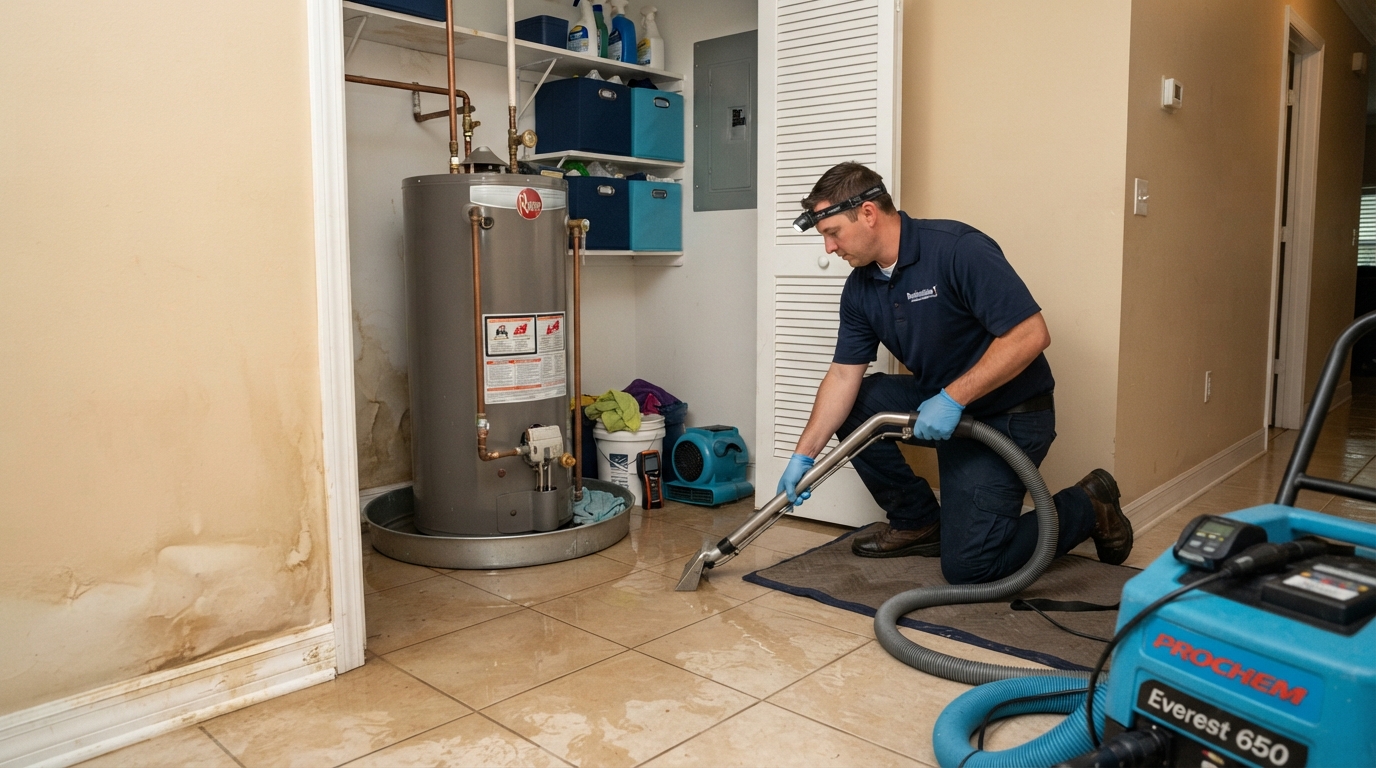
Water Removal & Drying After Leaking or Failed Water Heaters
Water Heater Leak Cleanup Daytona Beach
Water extraction and structural drying after water heater tank failures, connection leaks, and supply line breaks. We address water that has migrated into flooring, drywall, and adjacent rooms throughout Daytona Beach.
Request Water Damage Service
Fill out the form below and our team will get in touch with you immediately.
How Water Heater Leaks Damage Daytona Beach Properties
Water heaters fail in different ways. A tank can rust through slowly, releasing water gradually into a drain pan or onto the floor over weeks or months. A connection or supply line can develop a slow leak that goes unnoticed behind the unit. Or the tank can rupture suddenly, releasing dozens of gallons of water across the floor in minutes. Each scenario creates a different pattern of water damage, but all require prompt extraction and drying to prevent moisture from migrating further into the structure.
In Daytona Beach homes, water heaters are often located in garages, utility closets, laundry rooms, or interior closets. Water from a failed tank does not stay in one place. It flows beneath the unit, across the floor, under walls, and into adjacent rooms. In homes with the water heater inside a closet, water can seep beneath the closet door and travel down hallways or into nearby bedrooms before the leak is discovered.
Possible Leak Sources
- Rusted or corroded tank failures
- Supply line or connection leaks
- Drain valve failures
- Temperature and pressure relief valve leaks
- Drain pan overflow
- Nearby plumbing connection failures
Areas That Can Be Affected
- Garage floors and drywall
- Utility closet flooring and walls
- Laundry room flooring
- Adjacent hallways and bedrooms
- Baseboards and drywall
- Subflooring beneath finished floors
Water can travel beneath flooring and through walls in ways that are not immediately visible. A water heater in a garage might send water under the wall into an interior room. A closet leak might saturate the subfloor before water appears on the surface. Moisture detection tools are used to identify the full extent of the water loss. If significant standing water is present, our emergency water removal service addresses bulk water extraction before drying begins.
Water Heater Leak Cleanup Process
A systematic approach to water removal, moisture detection, and structural drying after water heater leaks and tank failures.
Stop Water Flow Where Safely Possible
If it is safe to do so, the water supply to the water heater should be shut off to stop ongoing water flow. If the area appears unsafe or water is near electrical components, avoid entering until the situation has been evaluated.
Address the Equipment or Plumbing Issue
The failed water heater, connection, or plumbing component should be addressed by the appropriate professional. Water damage cleanup addresses the resulting water, not the repair or replacement of the water heater itself.
Evaluate Water Migration
We assess how far water has traveled from the water heater location, checking adjacent rooms, hallways, and lower levels where applicable. Water from a tank failure can spread significantly across flooring.
Extract Standing Water
Standing water is extracted using professional equipment to remove bulk water from flooring, carpet, and surface areas before it migrates further into the structure.
Inspect Nearby Flooring and Walls
We inspect the flooring, drywall, baseboards, and cabinets near the water heater for saturation, identifying materials that may need attention based on the extent of the water loss.
Measure Moisture
Moisture meters and detection tools are used to evaluate water that has moved beyond the visibly wet area into subfloors, wall cavities, and concealed spaces.
Set Drying Equipment
Air movers and dehumidifiers are positioned to promote evaporation and capture moisture released from wet building materials into the indoor air.
Monitor & Evaluate Remaining Needs
Moisture levels are checked during the drying period, and once drying goals are reached, we evaluate any remaining affected materials and discuss appropriate next steps.
Important distinction: Water damage cleanup is separate from water heater repair or replacement. We address the water that has entered your property. A licensed plumber should address the failed water heater, connections, or plumbing. The repair may need to be completed before or during mitigation to stop ongoing water flow.
Where Water Heater Damage Can Spread
Water from a failed water heater can travel well beyond the utility closet or garage where the unit is located.
Utility Closets & Garages
Drywall, shared walls, baseboards, and flooring inside the closet or garage can all absorb water. In tight spaces, moisture can become trapped, making thorough drying especially important.
Flooring & Subfloors
Tile, laminate, hardwood, and carpet can all allow water to reach the subfloor beneath. Water can travel along the subfloor into adjacent rooms without appearing on the surface.
Adjacent Rooms & Hallways
Water can seep under walls and doors, reaching adjoining bedrooms, hallways, and living areas. The full extent of migration is mapped using moisture detection tools.
Cabinets & Baseboards
Nearby cabinets and baseboards can absorb water through contact with wet flooring. Baseboards can wick moisture up into the drywall behind them.
Slow Leak vs. Sudden Tank Failure
A slow water heater leak may create localized dampness that goes unnoticed for an extended period. Water can seep into the subfloor, behind baseboards, and into wall cavities without obvious visible signs. By the time the leak is discovered, moisture may have been present in building materials for weeks.
A sudden tank failure releases a large volume of water rapidly, producing visible standing water across the floor. While the damage is more immediately obvious, the sheer volume of water can send it further into the structure. Both scenarios require professional moisture detection and drying, but the approach may differ based on how long water has been present.
Water Heater Leak Cleanup FAQ
Answers to common questions about water damage from leaking or failed water heaters in Daytona Beach properties.
If it is safe to do so, shut off the water supply to the water heater and the power supply (gas or electric) to the unit. Avoid walking through standing water if the water is near electrical outlets, panels, or appliances. Contact a plumber to address the water heater itself, and call Daytona Beach Water Damage Restoration at 386-401-5178 so extraction and drying can begin before water migrates further into flooring and walls.
Yes, if you can safely access the shut-off valve, turning off the water supply to the water heater helps stop ongoing water flow. If the valve is difficult to reach or the area is flooded, you may need to shut off the main water supply to the property instead. If standing water is near electrical equipment or the area appears unsafe, avoid entering until the appropriate professional has evaluated the situation.
Yes. Water from a failed water heater tank can release a significant volume of water that flows across and beneath flooring. Tile, laminate, hardwood, and carpet can all allow water to migrate into the subfloor and adjacent rooms. Moisture detection tools are used to evaluate how far water has traveled beyond the visibly wet area, including beneath cabinets and into wall cavities.
Drywall can sometimes be dried in place depending on the amount of water, how long it has been wet, and the category of the water loss. Moisture meters help determine whether water has penetrated the drywall and the wall cavity behind it. In some cases, sections of drywall may need to be removed if they are too saturated or if the water category requires it. Each situation is evaluated individually.
No. We provide water damage cleanup, extraction, and structural drying after a water heater leak. The repair or replacement of the water heater, as well as any plumbing connections, should be addressed by a licensed plumber. We focus on removing the water and drying the affected building materials. The plumbing repair may need to be completed before or during mitigation.
Water heaters located inside utility closets can cause water to seep beneath the closet door into adjacent hallways, bedrooms, or living areas. Drywall inside the closet, the closet floor, and baseboards can all absorb water. Because the space is small, moisture can become trapped. We evaluate the closet, surrounding flooring, and adjacent walls to identify the full extent of the water loss.
Water extraction is needed whenever standing water is present after a water heater failure. A full tank can release dozens of gallons of water rapidly, and even a slow leak can accumulate significant water over time. Removing bulk water early reduces the amount of moisture that structural drying equipment must address afterward. If moisture remains inside walls or floors after standing water is removed, our structural drying service addresses the next stage of mitigation.
Water Heater Leaking in Daytona Beach?
Whether the leak was slow or sudden, water from a failed water heater can saturate flooring, drywall, and subfloors before it is discovered. Contact us now to begin extraction and drying.
386-401-5178Daytona Beach, FL 32114 | daytonawaterdamagerestoration@gmail.com
Related Water Damage Services
Emergency Water Removal
Rapid standing water extraction after water heater failures, appliance leaks, and plumbing supply line breaks.
Learn MoreWater Damage Restoration
Complete water damage mitigation including extraction, moisture detection, and structural drying.
Learn MoreBurst Pipe & Plumbing Leak Cleanup
Water removal and drying after broken pipes, supply line failures, and concealed plumbing leaks.
Learn MoreStructural Drying & Dehumidification
Professional drying of wet walls, floors, and building materials after water heater leaks.
Learn MoreWashing Machine & Laundry Room Cleanup
Water extraction and drying after washing machine overflows and laundry room flooding.
Learn More