Moisture Detection, Drying & Cleanup for Roof Leaks and Hidden Water Damage
Roof Leak, Ceiling, Wall & Hidden Water Damage Cleanup Daytona Beach
Professional detection and drying of ceiling water damage, wall moisture, and concealed water migration from roof leaks. We address hidden moisture that can remain in building materials long after the visible water is gone.
Request Water Damage Service
Fill out the form below and our team will get in touch with you immediately.
Signs of Hidden Water Damage in Daytona Beach Properties
Roof leaks and hidden water damage are not always obvious. Water can enter through a small roof opening during a storm and travel through the attic, along framing, and down inside wall cavities before any sign appears inside the living space. By the time a ceiling stain or wet wall is noticed, water may have been present in building materials for days or weeks. In Daytona Beach's coastal climate, with heavy summer rainfall and tropical weather, roof leaks are a common source of concealed water damage.
Visible staining does not always reveal the full affected area. Water can move along framing members, behind drywall, through insulation, across ceilings, and down wall cavities before it becomes visible. A small stain on a ceiling may represent a much larger area of saturation above and behind the surface.
Possible Signs of Hidden Water Damage
- Ceiling stains or discoloration
- Bubbling or peeling paint
- Damp or soft drywall
- Swollen baseboards
- Warped flooring
- Recurring dampness in specific areas
- Musty odor
- Visible dripping during rain
How Water Can Travel
- Along roof decking and framing
- Through insulation in attics
- Behind drywall in wall cavities
- Across ceiling assemblies
- Down through wall cavities to lower floors
- Beneath flooring from wall migration
Staining, musty odor, or discoloration does not automatically indicate mold. These signs do suggest that moisture may be present in building materials. A professional moisture evaluation can determine whether water is still present and whether drying is needed.
If a roof leak occurs during a storm, our storm and hurricane water damage restoration service addresses the full scope of storm-related water intrusion. If standing water has accumulated indoors, our emergency water removal service addresses bulk water extraction.
Roof Leak & Hidden Water Damage Cleanup Process
A systematic approach to moisture detection, water removal, and structural drying for roof leaks and concealed water damage.
Identify Visible Affected Areas
We assess the visible signs of water damage, including ceiling stains, wet drywall, bubbling paint, and dripping, to determine where water has entered the building.
Determine Whether Active Water Entry Is Continuing
We evaluate whether water is still entering the building, whether from an active roof leak, ongoing rain, or a plumbing source. If water is still entering, the source should be addressed.
Have Roofing or Exterior Source Corrected
If the water damage is caused by a roof leak or exterior opening, the appropriate roofing or exterior professional should repair the source. Water damage cleanup does not automatically include roof repair.
Evaluate Ceilings, Walls & Nearby Materials
We inspect drywall, ceilings, insulation, baseboards, and flooring near the visible water damage for saturation. Water can travel well beyond the initially affected area.
Use Moisture Detection Methods
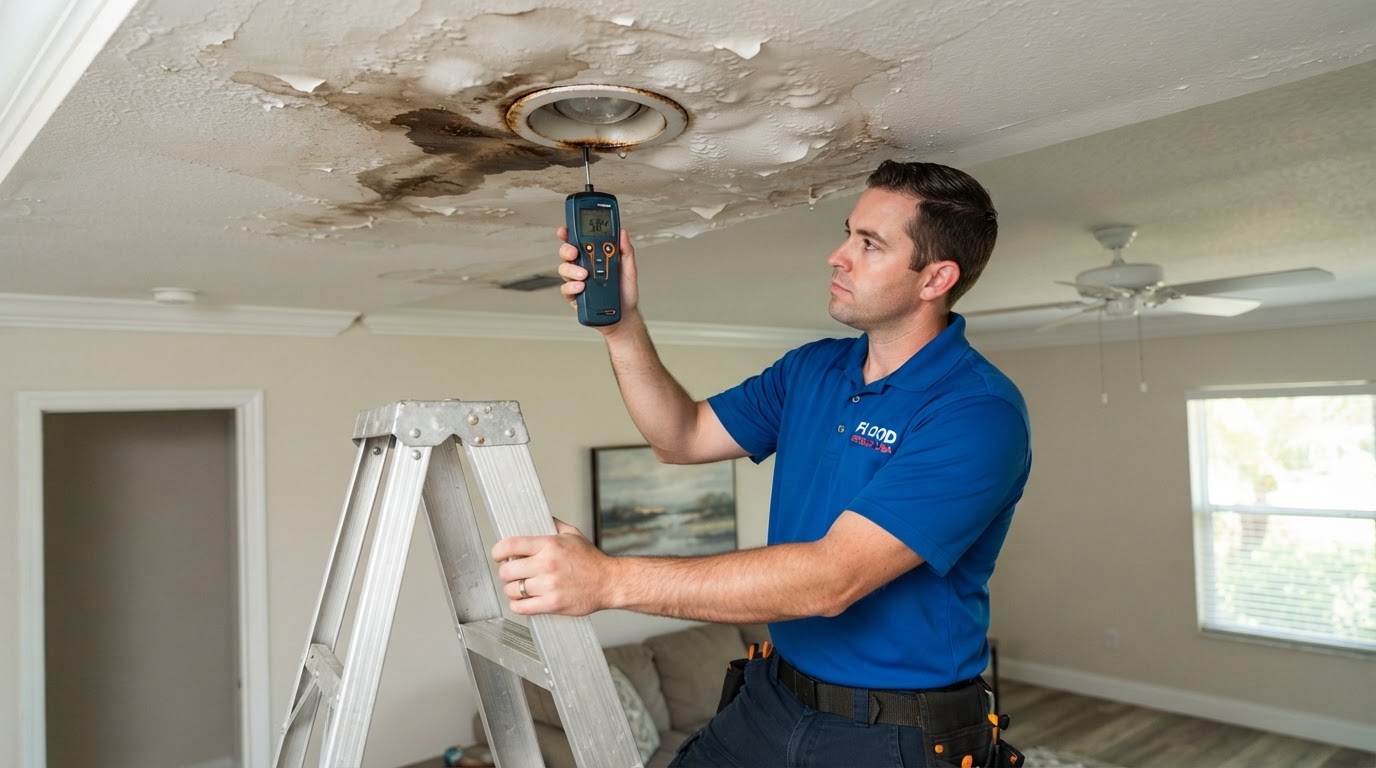
Moisture meters and detection tools are used to evaluate water that has migrated behind drywall, into wall cavities, through insulation, and beneath flooring without being visible.
Remove Standing Water If Present
If standing water has accumulated from a roof leak, it is extracted using professional equipment before drying begins.
Dry Affected Materials
Air movers and dehumidifiers are positioned to promote evaporation and capture moisture released from wet building materials into the indoor air.
Monitor Moisture & Evaluate Remaining Damage
Moisture levels are checked during the drying period, and once drying goals are reached, we evaluate any materials that remain damaged and discuss appropriate next steps.
Important distinction: Water damage cleanup does not automatically include roof repair. If the water damage is caused by a roof leak, a licensed roofing professional should repair the roof before or during mitigation to stop continued water entry. We address the water inside the building and dry the affected materials.
Ceilings, Walls, Attics & Hidden Moisture
Roof leaks can send water through multiple building assemblies before it becomes visible. Understanding where water can travel helps identify the full scope of the damage.
Ceiling Water Damage
Ceiling stains, dripping, and wet drywall are common signs of roof-related water intrusion. Water from a roof leak can saturate the ceiling drywall and insulation above it. Upper-floor plumbing or HVAC leaks can also cause ceiling damage in the room below.
Wall Water Damage
Water can travel down inside wall cavities from roof leaks, concealed plumbing, or window and rainwater entry. The wall surface may look dry while the studs, insulation, and drywall interior remain saturated. Moisture meters can detect water inside wall cavities.
Attic & Insulation Concerns
Roof water can travel through roof decking, saturate insulation in the attic, and then reach the ceiling drywall below. Wet insulation can hold moisture for extended periods and should be evaluated to determine whether it can be dried or needs to be removed.
Hidden Flooring Moisture
Water that travels down through wall cavities can reach the flooring and subfloor below. Moisture can migrate from walls into flooring or vice versa, making it important to evaluate both areas during the assessment.
Why Hidden Moisture Requires Professional Detection
Water that enters through a roof opening can travel through multiple building assemblies before it becomes visible. By the time a ceiling stain appears, water may have already saturated insulation above the ceiling, migrated down a wall cavity, or reached the flooring below. Surface drying alone does not address moisture that has migrated into these concealed areas.
Professional moisture detection tools can identify water inside wall cavities, above ceilings, and beneath flooring. Once the full extent of the water loss is mapped, our structural drying and dehumidification service addresses moisture in all affected areas.
Roof Leak & Hidden Water Damage FAQ
Answers to common questions about roof leaks, ceiling water damage, and hidden moisture detection in Daytona Beach.
Water trapped behind drywall may not be immediately visible. Signs include staining or discoloration, bubbling or peeling paint, soft or damp spots on the wall, swollen baseboards, or a musty odor. Moisture meters can detect water inside the wall cavity even when the surface appears dry. If you suspect hidden moisture, contact us for a moisture evaluation before the damage worsens.
Not necessarily. A ceiling stain indicates that water was present at some point, but it does not confirm whether the ceiling is still wet. The stain may remain after the area has dried, or moisture may still be present behind the surface. Moisture meters are used to determine whether the ceiling materials are still saturated or have returned to appropriate drying levels. If the leak is active, the stain may continue to grow.
Yes. Water that enters through a roof opening can travel along framing members, down through wall cavities, and behind drywall before appearing as a stain or wet spot on a wall far from the actual roof entry point. Water follows paths of least resistance, which can carry it through insulation, along studs, and into lower levels. Moisture detection tools are used to trace the full path of water migration.
Wet drywall can sometimes be dried in place depending on the amount of water, how long it has been wet, and the category of the water loss. Moisture meters help determine whether water has penetrated through the drywall into the wall cavity. If the drywall is too saturated, has lost structural integrity, or the water category requires it, sections may need to be removed. Each situation is evaluated individually.
Yes. Insulation in attics and wall cavities can absorb and hold significant amounts of water after a roof leak. Wet insulation may lose its insulating properties and can remain damp long after surrounding materials have dried. A professional should evaluate whether the insulation can be dried or whether it needs to be removed and replaced. This is particularly important in ceiling assemblies where insulation sits above drywall.
No. We provide water damage cleanup, moisture detection, and structural drying after roof leaks. The repair of the roof itself should be addressed by a licensed roofing professional. We focus on removing water and drying the affected building materials inside the property. The roof repair should be completed before or during mitigation to stop continued water entry.
A leak that appears only during heavy or wind-driven rain often indicates a roof penetration, flashing issue, or exterior opening that allows water to enter under specific conditions. Document the area where water appears and contact a roofing professional to evaluate the exterior. Then contact us at 386-401-5178 to assess and dry the interior water damage. Even intermittent leaks can saturate building materials over time, so the interior should be evaluated even if the leak seems minor.
Roof Leak or Hidden Water Damage in Daytona Beach?
Hidden moisture can remain in building materials long after the visible water is gone. Professional moisture detection and structural drying can identify and address water that has migrated behind walls, above ceilings, and beneath flooring. Contact us now.
386-401-5178Daytona Beach, FL 32114 | daytonawaterdamagerestoration@gmail.com
Related Water Damage Services
Storm & Hurricane Water Damage Restoration
Water extraction and drying after storm intrusion, wind-driven rain, and hurricane-related roof and wall water entry.
Learn MoreStructural Drying & Dehumidification
Professional drying of wet ceilings, walls, insulation, and building materials after roof leaks and hidden water damage.
Learn MoreWater Damage Restoration
Complete water damage mitigation including extraction, moisture detection, and structural drying.
Learn MoreEmergency Water Removal
Rapid standing water extraction when roof leak water has accumulated indoors.
Learn MoreBurst Pipe & Plumbing Leak Cleanup
Water removal and drying after plumbing failures that can cause ceiling and wall water damage.
Learn More