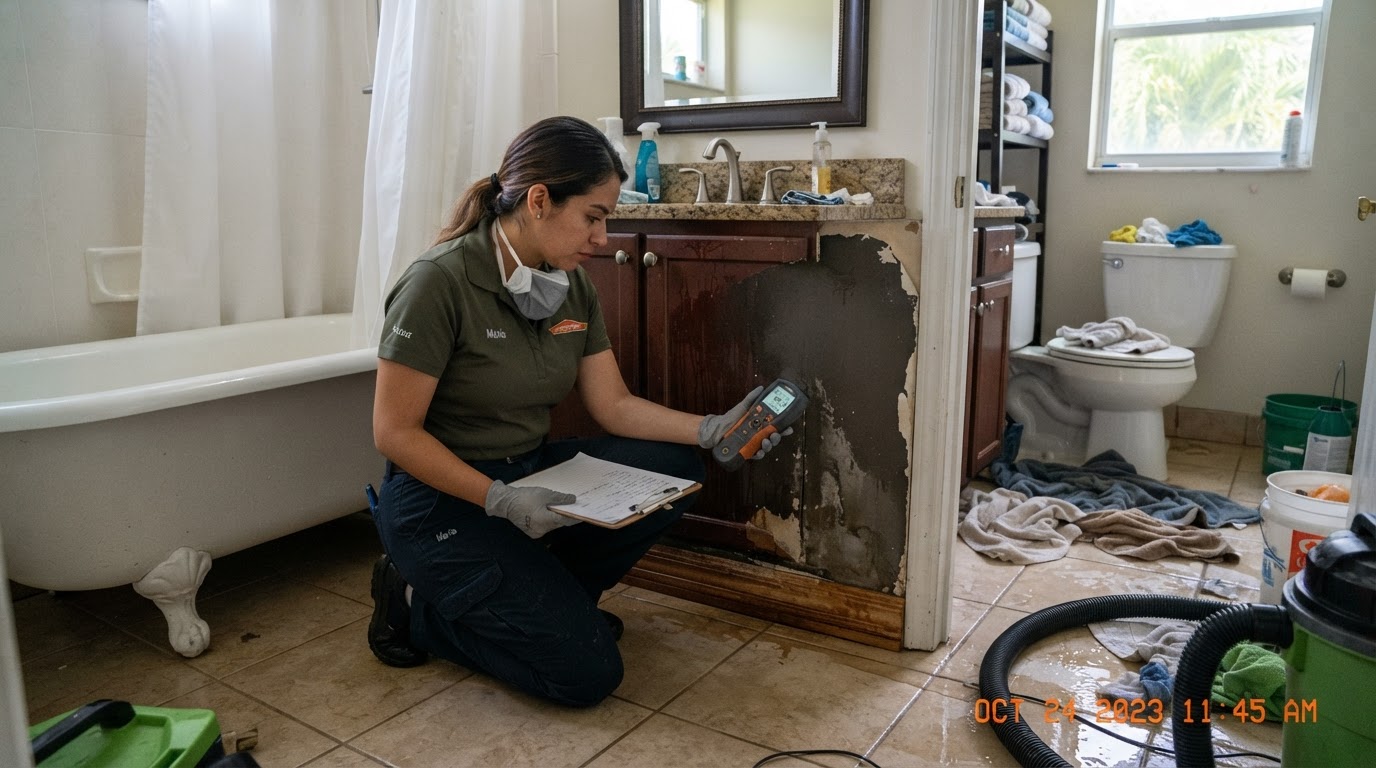
Water Removal & Structural Drying for Bathroom Leaks and Overflows
Toilet Overflow, Shower & Bathroom Water Damage Cleanup Daytona Beach
Water extraction and drying after toilet overflows, shower leaks, bathtub overflows, and bathroom plumbing failures. We address water that has migrated beneath tile, into walls, and through ceilings in Daytona Beach properties.
Request Water Damage Service
Fill out the form below and our team will get in touch with you immediately.
Common Bathroom Water Damage Sources in Daytona Beach
Bathrooms are one of the most common sources of indoor water damage in Daytona Beach homes. A toilet can overflow when a drain clogs or the fill valve malfunctions. A shower or bathtub can overflow if the drain is slow or the fixture is left running. A supply line to the toilet or sink can fail, releasing water continuously until the supply is shut off. A shower pan can leak, allowing water to seep beneath the tile and into the subfloor over time. Each of these scenarios creates a different pattern of water damage, and the appropriate cleanup approach depends on the source and contamination level.
A key consideration with bathroom water damage is the contamination level. A clean-water supply line leak is handled differently from a toilet overflow that may involve waste. If the water has contacted unsanitary materials, additional precautions are necessary. If sewage or contaminated water is present, our sewage backup and black water cleanup service may be appropriate.
Common Bathroom Sources
- Toilet overflows and clogs
- Leaking toilet supply lines
- Shower and bathtub overflows
- Shower pan leaks
- Sink overflows and supply line failures
- Drain-related backups
- Water escaping shower and tub enclosures
Contamination Considerations
- Clean water from supply lines
- Grey water from shower or sink overflows
- Black water from toilet backups with waste
- Water that has contacted unsanitary surfaces
The contamination level determines the cleanup approach and which materials can be dried versus removed.
Water from a bathroom can travel beneath tile, behind baseboards, under vanities, and into adjacent rooms. In homes with upstairs bathrooms, water can also travel down through the floor assembly and damage the ceiling below. If significant standing water is present, our emergency water removal service addresses bulk water extraction before drying begins.
Bathroom Water Damage Cleanup Process
A systematic approach to water extraction, contamination evaluation, moisture detection, and structural drying after bathroom water losses.
Determine Source and Affected Area
We identify the source of the water, whether it is a toilet overflow, shower leak, supply line failure, or fixture issue, and map the visible water and affected materials.
Stop Ongoing Water Flow
Where practical, the water supply to the affected fixture or the property is shut off to stop ongoing water flow. If the area appears unsafe, avoid entering until it has been evaluated.
Consider Contamination Level
The cleanup approach depends on the source of the water. A clean-water supply line leak is handled differently from a toilet overflow that may involve contamination. If sewage or contaminated water is present, additional precautions are taken.
Remove Standing Water
Standing water is extracted using professional equipment to remove bulk water from bathroom flooring and any adjacent areas before it migrates further into the structure.
Inspect Flooring and Surrounding Walls
We evaluate bathroom tile, subfloor, drywall, baseboards, and vanity areas for saturation. Water can seep beneath tile and behind vanities without being immediately visible.
Evaluate Adjoining Rooms or Ceilings Below
Water from an upstairs bathroom can travel down through the floor and appear as ceiling stains or wet drywall in the room below. We check all potentially affected areas.
Dry Affected Structural Materials
Air movers and dehumidifiers are positioned to promote evaporation and capture moisture released from wet building materials into the indoor air.
Monitor Moisture & Evaluate Remaining Materials
Moisture levels are checked during the drying period, and once drying goals are reached, we evaluate any remaining affected materials and discuss appropriate next steps.
Not all bathroom materials can be dried in place. Porous materials that have contacted contaminated water may need to be removed rather than dried. Each situation is evaluated individually based on the source, contamination level, and extent of the water loss.
Where Bathroom Water Can Hide
Water from a bathroom leak or overflow can travel into areas that are not immediately visible, making thorough moisture detection essential.
Behind Baseboards & Vanities
Water can seep behind baseboards and beneath vanities, saturating drywall and the subfloor in these concealed areas. Moisture can remain trapped behind a vanity long after the visible floor has dried.
Beneath Flooring & Subfloor
Water can enter through grout lines and tile edges, reaching the subfloor beneath. The subfloor can remain wet even when the tile surface feels dry. Moisture meters are used to evaluate beneath the surface.
Wall Cavities & Adjacent Rooms
Water can travel through wall cavities and into adjacent closets or hallway flooring. Drywall can wick moisture upward from wet flooring, saturating the wall behind the surface.
Ceilings Below Upstairs Bathrooms
Water from an upstairs bathroom can travel through the floor assembly and appear as ceiling stains, wet drywall, or dripping in the room below.
Upstairs Bathroom Water Damage
An upstairs bathroom leak can appear in the ceiling of the room below as:
- Ceiling stains or discoloration
- Wet or soft drywall on the ceiling
- Dripping from the ceiling or around light fixtures
- Bubbling or peeling paint on the ceiling
If a ceiling is sagging or appears unstable, avoid standing directly beneath it. Contact us for evaluation and appropriate mitigation. Our hidden water damage detection service also addresses concealed moisture from upstairs leaks.
Bathroom Water Damage Cleanup FAQ
Answers to common questions about toilet overflows, shower leaks, and bathroom water damage cleanup in Daytona Beach.
If it is safe to do so, shut off the water supply valve behind the toilet to stop the overflow. Avoid walking through the water if you suspect it may contain contamination. If the water has contacted unsanitary materials or appears discolored, avoid direct contact. Contact Daytona Beach Water Damage Restoration at 386-401-5178 so extraction and cleanup can begin. If the overflow involves contamination, our sewage backup cleanup service may be appropriate.
Not always. A toilet overflow that involves only clean water from the supply line may be handled as a clean-water loss. However, if the overflow involves water from the bowl that contains waste, or if the water has contacted unsanitary surfaces, it is treated with additional precautions. The contamination level depends on the source and what the water has contacted. We evaluate each situation individually to determine the appropriate cleanup approach.
Yes. Water can enter through grout lines, around the toilet base, through damaged caulking around tubs and showers, and at floor transitions. Once beneath the tile, water can saturate the subfloor and travel into adjacent rooms. Moisture detection tools are used to evaluate whether water has penetrated beneath the surface and how far it has migrated.
Yes. Water from an upstairs bathroom can travel through the floor assembly and appear as ceiling stains, wet drywall, dripping, or soft ceiling areas in the room below. A slow leak may cause a ceiling stain that grows over time, while a larger failure can produce visible dripping. If a ceiling is sagging or appears unstable, avoid standing directly beneath it and contact us for evaluation.
Yes. Moisture meters can be used to evaluate drywall behind and beneath bathroom vanities, even when the surface is not visibly wet. Water can seep beneath a vanity from a leaky supply line or drain, saturating the drywall and subfloor behind it without obvious signs. Detection tools help identify moisture in these concealed areas.
After a bathtub overflow, water typically spreads across the bathroom floor and can seep beneath tile, behind baseboards, and into adjacent rooms. We extract standing water, evaluate the subfloor and surrounding walls for moisture, and position drying equipment to address any water that has migrated beyond the visible area. If water has reached the ceiling below, that area is also evaluated.
Bathroom Water Damage in Daytona Beach?
Water from a toilet overflow, shower leak, or supply line failure can seep beneath tile, behind vanities, and through ceilings. The sooner extraction and drying begin, the more effectively the water loss can be contained. Contact us now.
386-401-5178Daytona Beach, FL 32114 | daytonawaterdamagerestoration@gmail.com
Related Water Damage Services
Sewage Backup & Black Water Cleanup
Professional cleanup for sewage backups, toilet overflows with contamination, and black water events requiring additional precautions.
Learn MoreEmergency Water Removal
Rapid standing water extraction after bathroom overflows, plumbing failures, and fixture leaks.
Learn MoreBurst Pipe & Plumbing Leak Cleanup
Water removal and drying after supply line breaks, plumbing failures, and concealed bathroom leaks.
Learn MoreStructural Drying & Dehumidification
Professional drying of wet bathroom flooring, walls, subfloors, and ceiling materials below.
Learn MoreRoof Leak & Hidden Water Damage
Detection and drying for ceiling water damage and hidden moisture that may appear near bathroom areas.
Learn More