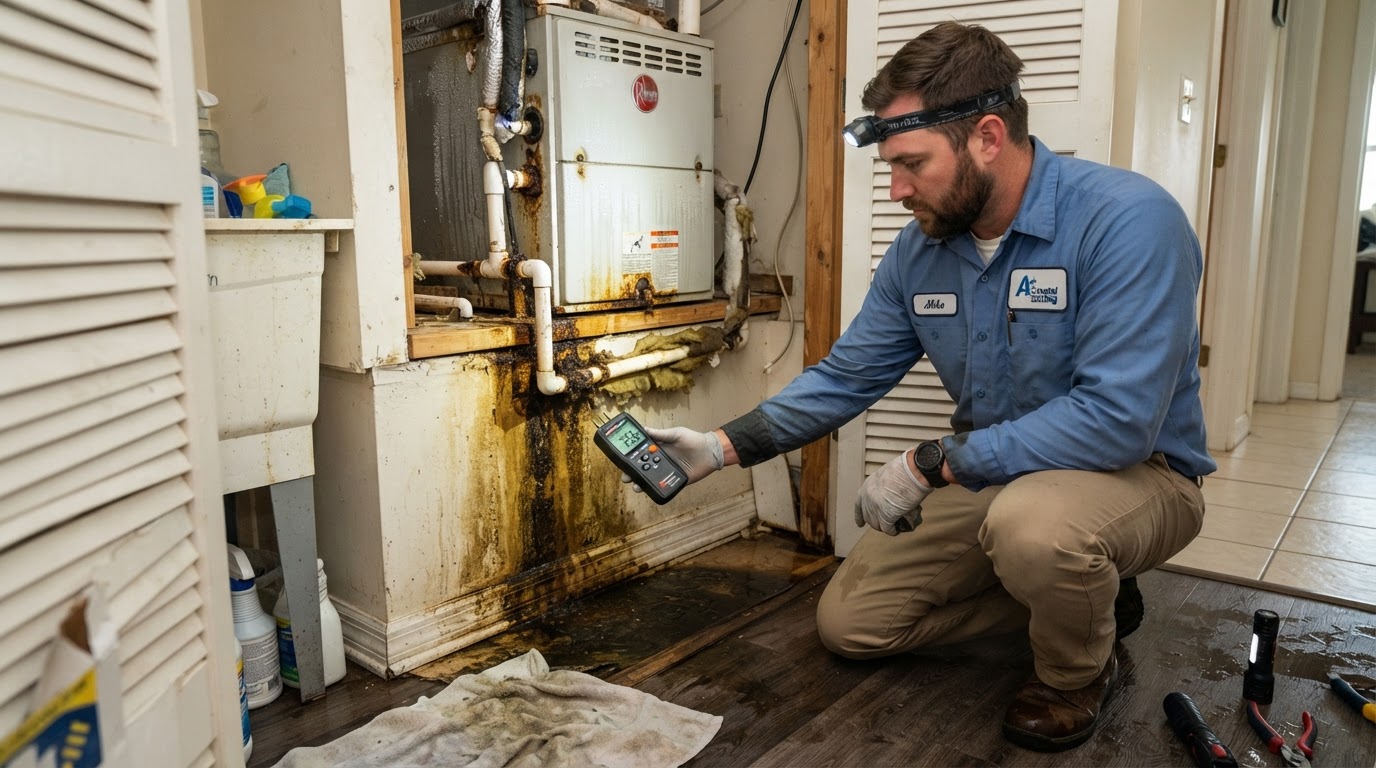
Cleanup & Drying After AC Condensate and Appliance Water Leaks
AC/HVAC Condensate Drain Line & Appliance Leak Cleanup Daytona Beach
Water extraction and structural drying after AC drain line clogs, condensate pan overflows, refrigerator supply line leaks, dishwasher leaks, and other appliance-related water damage in Daytona Beach homes.
Request Water Damage Service
Fill out the form below and our team will get in touch with you immediately.
AC Condensate & Appliance Water Damage Sources
In Daytona Beach's warm, humid climate, air conditioning systems run heavily for much of the year. Every time an AC unit runs, it removes moisture from the indoor air and sends that condensate through a drain line to the exterior. When that drain line becomes clogged with algae, dust, or debris, the water backs up and overflows the drain pan directly onto the floor, into a closet, or through the ceiling below. AC condensate issues are one of the most common sources of indoor water damage in coastal Florida homes.
Appliance leaks are another frequent source. A refrigerator supply line or ice maker connection can develop a slow leak that sends water beneath the appliance and into the subfloor. A dishwasher can leak from a door seal, pump, or connection, sending water into the surrounding cabinetry and flooring. These leaks can be slow and concealed, allowing water to saturate building materials for weeks before it is discovered.
AC / HVAC Condensate Problems
- Condensate drain line clogs
- Drain pan overflow
- Water around the air handler
- Repeated moisture in HVAC closets
- Ceiling damage from attic AC units
Appliance Leaks
- Refrigerator supply line leaks
- Ice maker line failures
- Dishwasher leaks and connection failures
- Other appliance connection leaks
- Slow, concealed leaks beneath appliances
Because AC condensate and appliance leaks can be slow and concealed, water may saturate drywall, subfloor, and surrounding materials before it becomes visible. A thorough assessment with moisture detection tools is necessary to identify the full extent of the water loss. If standing water is present, our emergency water removal service addresses bulk water extraction before drying begins.
AC & Appliance Water Damage Cleanup Process
A systematic approach to water extraction, moisture detection, and structural drying after AC condensate overflows and appliance leaks.
Identify Affected Water-Damaged Area
We assess the area where water has appeared, whether around the air handler, beneath an appliance, or in a nearby closet or ceiling, and map the visible water and affected materials.
Stop Water Source When Safely Possible
If it is safe to do so, the water source should be addressed. For AC condensate issues, the HVAC system may need to be shut off. For appliance leaks, the water supply should be shut off. If the area appears unsafe, avoid entering.
Have the Source Corrected by the Appropriate Professional
The AC drain line, appliance, or plumbing component should be repaired by the appropriate professional. Water damage cleanup addresses the resulting water, not the repair of the HVAC system or appliance itself.
Extract Standing Water
Standing water is extracted using professional equipment to remove bulk water from flooring, carpet, and surface areas before it migrates further into the structure.
Inspect Surrounding Flooring and Walls
We evaluate the flooring, drywall, baseboards, and cabinets near the AC unit or appliance for saturation, identifying materials that may need attention.
Detect Hidden Moisture
Moisture meters and detection tools are used to evaluate water that has moved beyond the visibly wet area into wall cavities, subfloors, and concealed spaces.
Dry and Dehumidify
Air movers and dehumidifiers are positioned to promote evaporation and capture moisture released from wet building materials into the indoor air.
Monitor Moisture & Determine Additional Needs
Moisture levels are checked during the drying period, and once drying goals are reached, we evaluate any remaining affected materials and discuss appropriate next steps.
Important distinction: Water damage cleanup is separate from AC repair or appliance repair. We address the water that has entered your property. An HVAC technician should address the drain line clog or air handler issue, and an appliance professional should address the leaking appliance. The source repair may need to be completed before or during mitigation to stop ongoing water flow.
Common Hidden Moisture Areas After AC & Appliance Leaks
AC condensate and appliance leaks often produce slow, concealed water damage that can saturate building materials before it becomes visible.
HVAC Closets & Air Handlers
Drywall behind and around air handlers can absorb condensate water. Flooring beneath the unit can become saturated, and water can travel from the closet into adjacent rooms.
Beneath Appliances & Cabinetry
Water from refrigerator and dishwasher leaks can travel beneath appliances into toe-kick areas and subflooring. Kitchen cabinets can absorb water through contact with wet flooring.
Wall Cavities & Subfloors
Water can enter wall cavities behind HVAC closets and travel along subfloors beneath finished flooring. Baseboards can wick moisture up into the drywall behind them.
Nearby Closets & Adjacent Rooms
Water from an AC closet or appliance area can travel into nearby closets, hallways, and adjacent rooms without being immediately visible at the source.
Slow Leaks Can Be Easy to Miss
AC condensate and appliance leaks often develop slowly, allowing water to saturate building materials for extended periods before it is noticed. Signs that may indicate a slow leak include:
- Staining or discoloration on drywall or ceilings
- Warped or buckling flooring near the appliance or AC unit
- Damp or swollen baseboards
- Musty odor in or near the HVAC closet or appliance area
- Discoloration at the base of cabinets or walls
These signs do not automatically indicate mold, but they do suggest that moisture may be present in building materials. If you notice any of these signs, contact us for a moisture evaluation. Our structural drying service addresses moisture that has migrated into concealed areas.
AC Drain Line & Appliance Leak Cleanup FAQ
Answers to common questions about AC condensate water damage and appliance leak cleanup in Daytona Beach.
Yes. When an air conditioning condensate drain line becomes clogged, the water that the AC unit removes from the air has nowhere to go. The drain pan fills and overflows, sending water onto the floor beneath the air handler, into nearby closets, or through the ceiling if the unit is in an attic. In Daytona Beach's humid climate, AC units run frequently and produce significant condensate, making drain line clogs a common source of water damage.
If it is safe to do so, turn off the air conditioning system to stop additional condensate production. Shut off the water supply if the leak is from a connected component. Avoid walking through standing water if electrical components are nearby. Contact an HVAC professional to address the drain line or pan issue, and call Daytona Beach Water Damage Restoration at 386-401-5178 so extraction and drying can begin before water migrates further into flooring and walls.
Yes. Condensate water that overflows from a drain pan can saturate drywall in the closet or area surrounding the air handler. Water can also travel down through the ceiling if the unit is located in an attic. Drywall absorbs moisture readily, and water can wick upward into the wall beyond the visibly wet area. Moisture meters are used to evaluate the full extent of the water loss.
Yes. A slow leak from a refrigerator supply line or ice maker connection can send water beneath the appliance and into the subfloor without being immediately visible. Over time, water can travel along the subfloor beneath nearby flooring and into adjacent cabinets. By the time the leak is discovered, moisture may have been present in building materials for an extended period.
Yes. A dishwasher leak can send water beneath the appliance and into the surrounding cabinetry. The toe-kick area beneath cabinets can absorb water, and the subfloor beneath the dishwasher can become saturated. Water can also travel from the dishwasher area into adjacent flooring. Moisture detection tools help evaluate the full extent of the water loss in and around the kitchen.
No. We provide water damage cleanup, extraction, and structural drying after AC condensate overflows and appliance leaks. The repair of the AC drain line, appliance, or plumbing connection should be addressed by the appropriate professional. We focus on removing the water and drying the affected building materials. The source repair may need to be completed before or during mitigation.
Moisture meters and detection tools are used to evaluate materials that may be wet beneath the surface. We check behind walls, beneath flooring, inside cabinets, and in areas where water can travel without being visible. A slow leak from an AC drain line or appliance connection can saturate building materials for weeks before it is noticed, making thorough moisture detection especially important.
AC Drain Line or Appliance Leak in Daytona Beach?
AC condensate and appliance leaks can saturate drywall, subfloors, and cabinetry before they become visible. The sooner extraction and drying begin, the more effectively the water loss can be contained. Contact us now.
386-401-5178Daytona Beach, FL 32114 | daytonawaterdamagerestoration@gmail.com
Related Water Damage Services
Water Damage Restoration
Complete water damage mitigation including extraction, moisture detection, and structural drying for homes and businesses.
Learn MoreEmergency Water Removal
Rapid standing water extraction after AC condensate overflows, appliance leaks, and plumbing failures.
Learn MoreStructural Drying & Dehumidification
Professional drying of wet drywall, flooring, and building materials after AC and appliance water leaks.
Learn MoreBurst Pipe & Plumbing Leak Cleanup
Water removal and drying after supply line breaks, plumbing failures, and concealed leaks.
Learn MoreWashing Machine Overflow Cleanup
Water extraction and drying after washing machine overflows and laundry room water damage.
Learn More